1998–2002
BA (Honours), English
University of Victoria
An academic foundation in language, literature, research, and close reading, including honours work connected to Indigenous learning.
Thinking Practice · Nanaimo, BC
Educator. Learner. Writer.
Teaching begins with noticing.
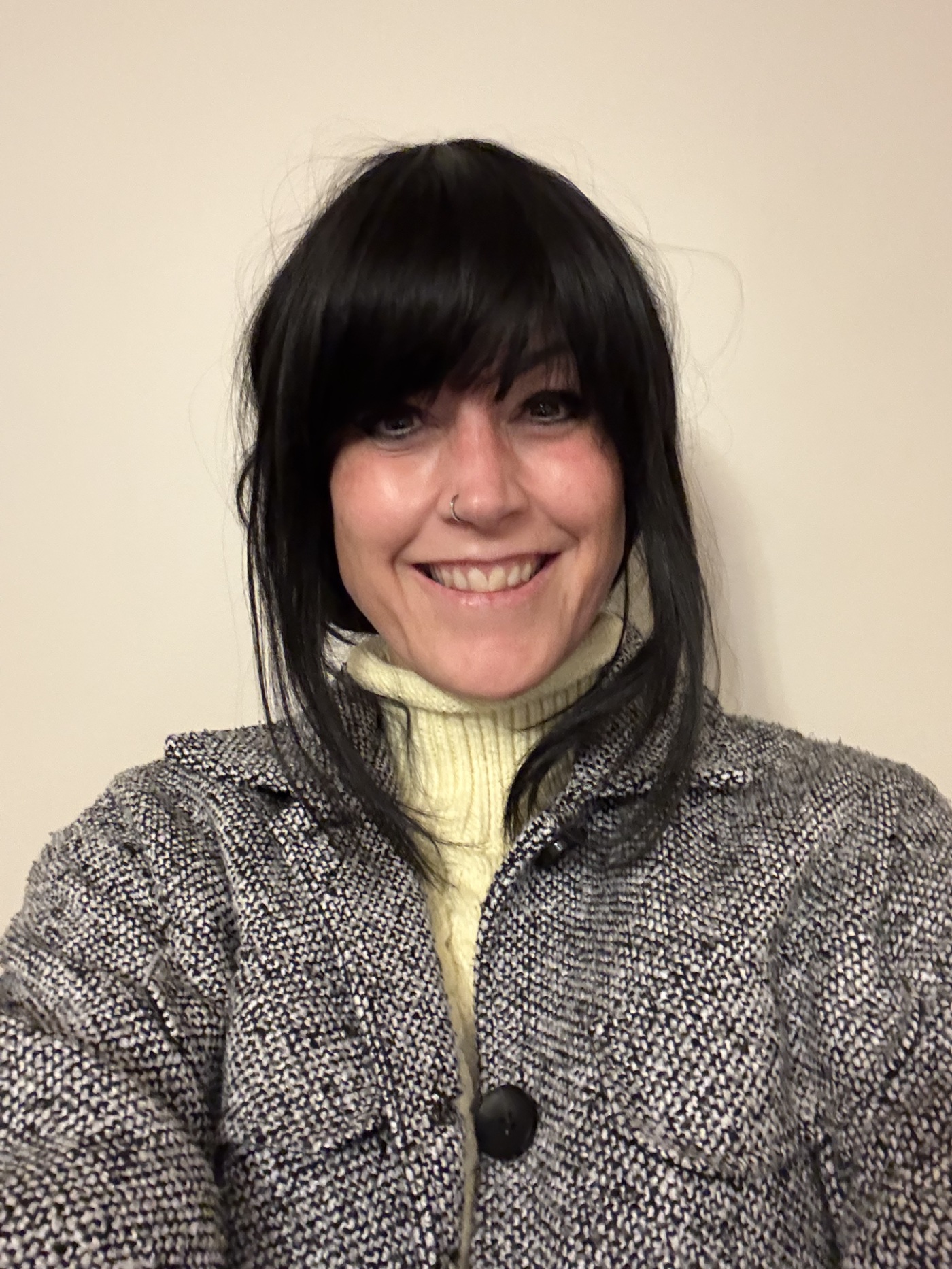
About
Pathway to teaching
I did not begin in a classroom, but much of my work has always been educational in function. After earning a BA (Honours) in English and completing coursework in UVic’s Secondary Education Professional Development Program, I spent many years in communications, digital production, and project leadership. Those roles taught me to identify an audience, clarify a purpose, organize complex information, and create resources people could actually use.
Returning to education—as an Education Assistant, after-school program builder, and casual Computer Assisted Learning Tutor—did not replace that earlier expertise; it gave it a new purpose. I now use the same strategies to support learners, collaborate with families and colleagues, translate research into practice, and continue toward BC teacher certification.
Before the classroom
Before the classroom
Before I worked in schools, I spent years writing, managing projects, building websites, producing video and print campaigns, and helping clients explain complicated things clearly.
The settings varied a lot. I worked with universities, museums, arts organizations, technology companies, nonprofits, and small businesses. What I kept doing, over and over, was figuring out who something was for, what they needed to understand, and where the communication was likely to fall apart.
Who is this for, and what will help them understand?
I use that experience every day in education. I notice confusing instructions, think about how information is organized, and care about whether a resource is still useful after I hand it to someone. I am used to listening to different stakeholders, revising through feedback, and keeping track of many moving pieces without losing sight of the person who eventually has to use the thing.
Questions I still ask
The subject matter is different now, but I recognize the work.
Selected earlier contexts
Contributed writing, project management, web support, account service, or content development in settings including the University of Victoria, Museum of Science and Industry in Chicago, Art Gallery of Greater Victoria, Pacific Opera Victoria, Ocean Networks Canada, and the Vancouver Island School of Innovation and Inquiry.
Reflection
For a long time I described education as a career change. That is true in the obvious sense: I left communications and started working in schools.
What surprised me was how much of my earlier experience remained useful.
Years of writing taught me to pay attention to ambiguity. Project work taught me to organize information and anticipate problems before they reached the person at the other end. Client work made me comfortable asking questions, listening carefully, and revising something that was not working.
Those skills feel more consequential in education. A confusing website is annoying. A confusing instruction can be the point where a student decides they cannot do the work.
I like that the skills I built in one part of my life have turned out to matter in another.
See this experience in practice
Family literacy resource designMaking Early Literacy Research Accessible to Families →Program and staff resource designDesigning a Literacy-Rich After-School Program →Onboarding, systems, and procedural designDesigning an Adaptable CALT Quickstart Guide →Concise advocacy and visual communicationMaking Neurodivergent Masking Visible →Education & experience
Education & experience
1998–2002
University of Victoria
An academic foundation in language, literature, research, and close reading, including honours work connected to Indigenous learning.
Post-degree study
University of Victoria
Completed the Secondary Education PDP coursework; currently exploring the most appropriate pathway to complete BC teacher certification.
1999 onward
Public, academic, and private-sector work
Worked across universities, agencies, nonprofits, technology, culture, tourism, and community organizations. Roles included professional writing, project and client management, web publishing, content strategy, video production, traditional print advertising, and resource development. Across those settings, the work required the same core skills: understand the audience, clarify the purpose, organize complexity, and make information usable.
Explore Before the Classroom →2023–present
SD68 secondary schools · Island ConnectEd
Working across SD68 secondary schools and Island ConnectEd broadened my practice into distance and independent learning. I support students in navigating coursework, technology, progress, and connection, and created a district CALT training manual to help orient newly hired tutors.
Recent practice
Elementary classrooms and school-age care
Supported diverse learners in elementary classrooms and school-age care through literacy intervention, co-regulation, visual supports, behaviour support, small-group learning, and inclusive classroom routines.
Current learning
Graduate studies
Graduate coursework has included literacy, language comprehension, assessment and intervention, executive functioning, and inclusive education, including Level B assessment training through MEDS 610: Assessment, Intervention, and Planning.
Classroom practice
Classroom practice
I have spent a lot of my working life turning complicated information into something another person can understand.
In schools, that might mean rewriting instructions, creating a visual, explaining a routine, or translating research for a family or colleague.
I try to notice where a learner hesitates, checks out, becomes overwhelmed, or suddenly becomes interested.
Those moments usually tell me more than assuming the original task should work exactly as designed.
I like visible systems: schedules, routines, labelled materials, shared notes, and clear expectations.
They reduce the number of things a learner—or an adult supporting them—has to keep in their head.
Whether I am writing a social story, a staff resource, a family note, or instructions for a student, I want the language to be clear enough that the reader knows what it means and what to do with it.
Open examples
Structured literacy, phonological awareness, reading comprehension, vocabulary development, and research translated into practical resources for teachers and families.
Child-centred supports that treat behaviour as communication and create conditions for safety, agency, and participation.
Practical systems developed with teachers, specialists, educational assistants, students, and families.
Classroom and community experiences designed for access, independence, curiosity, and meaningful choice.
Evidence of practice
Case studies
Each project began with a real educational need. These case studies show what I tried, what informed my choices, what happened, and what I learned from the work.
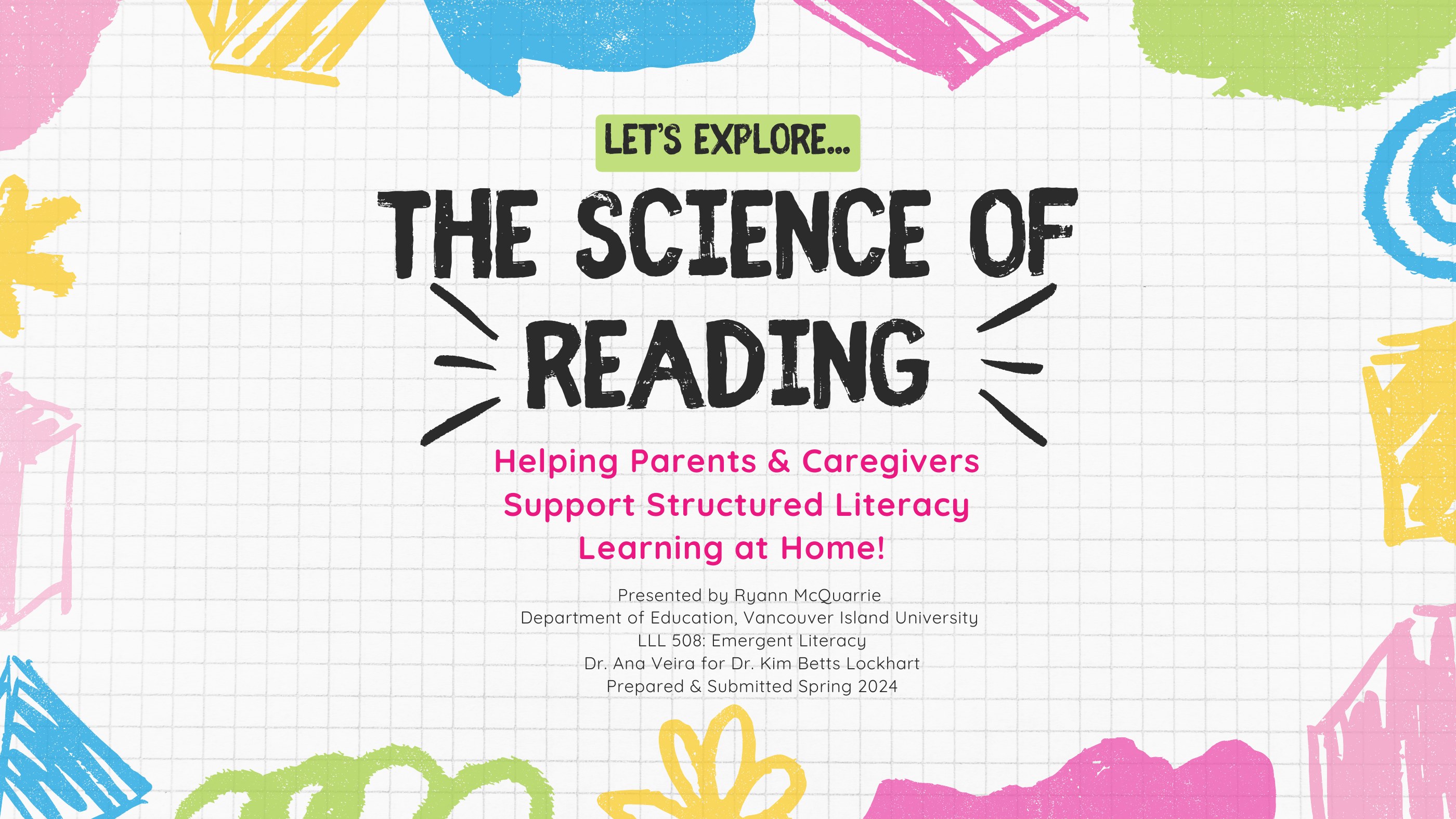
Case Study 03 · Spring 2024
Families are essential partners in literacy development, but professional language can create distance instead of confidence. This project translates reading research into clear explanations and practical ways families can support learning at home.
Read case study →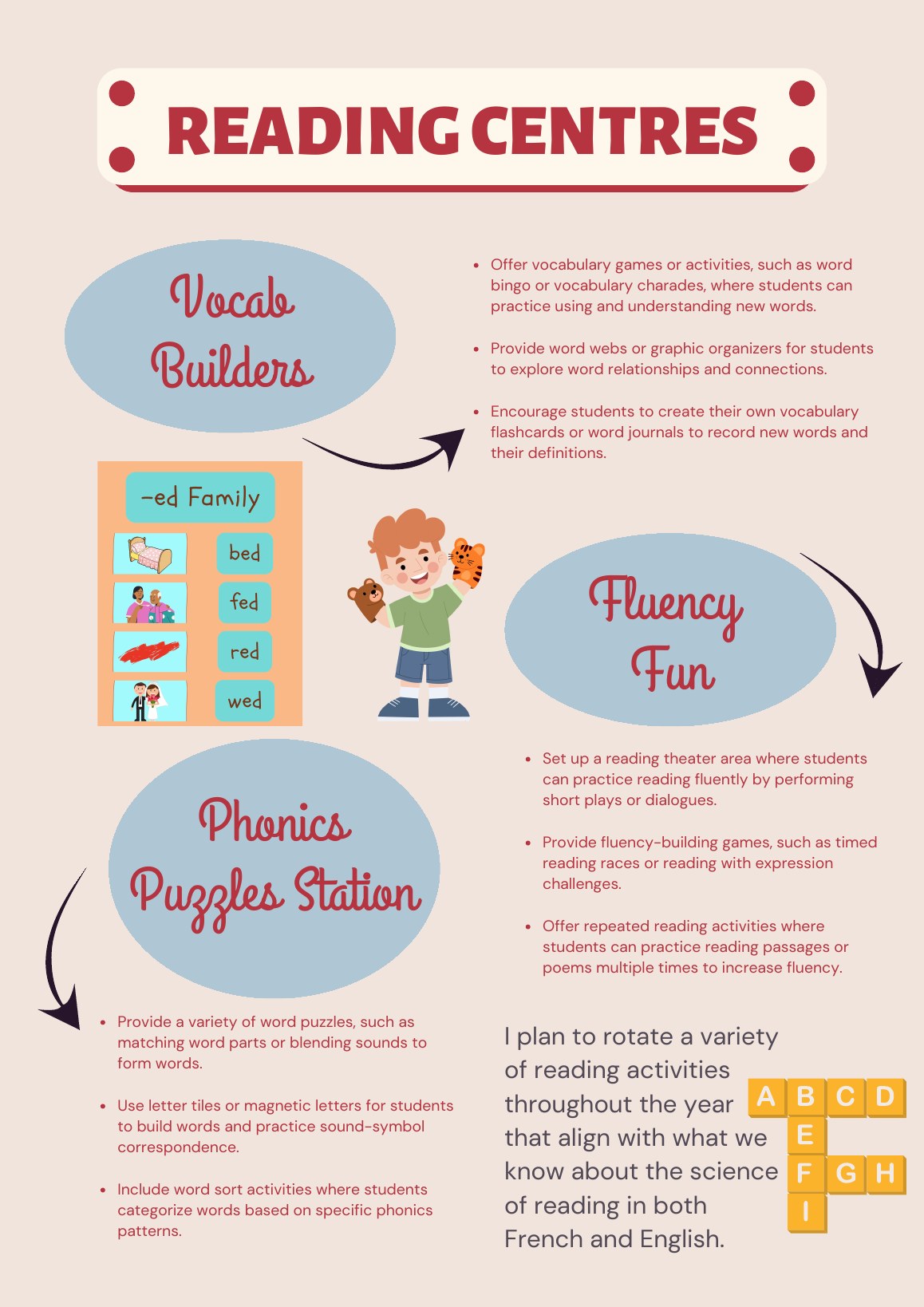
Case Study 01 · 2023–2024
Working in a new school-age care program meant creating enough structure to support learners from Kindergarten to Grade 7 while staying responsive to the children who actually arrived each day.
Read case study →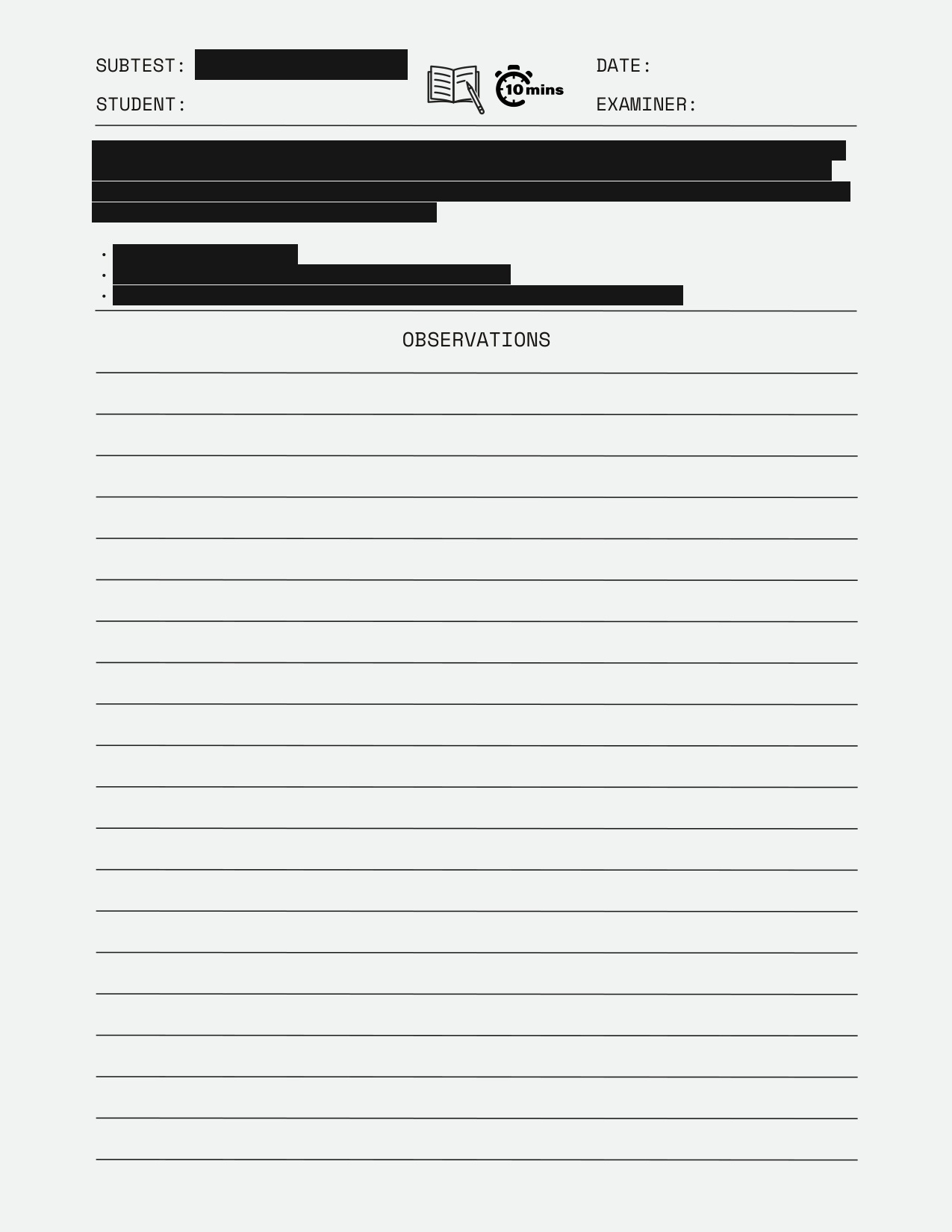
Case Study 02 · Spring 2024
A practical examiner pack reduced avoidable cognitive load during KTEA-3 administration practice, leaving more room for accurate observation and attention to the learner.
Read case study →Field notes
Reflections from practice
Small moments in practice often change what I notice, what I question, and what I try next.
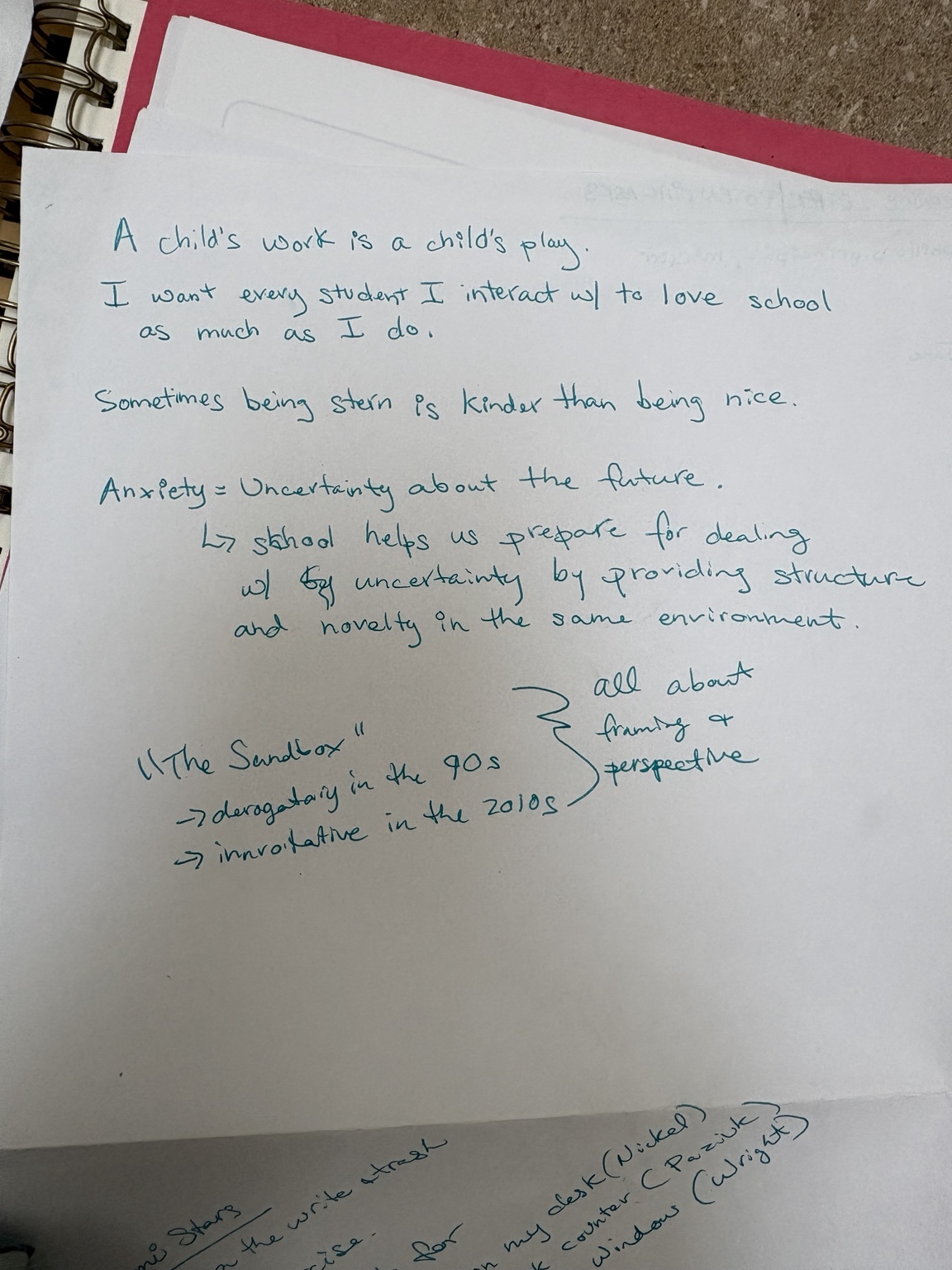
Field Note 010 · Featured reflection
A failed attempt at an origami star, and two pages of notes about frustration, structure, boundaries, and choice.
Read the field note →A hesitation before reading aloud, a change in posture, or a student becoming unusually quiet can all be useful information. Paying attention to those changes helps me adjust the task, offer support sooner, and avoid treating a learner’s response as separate from its context.
Before responding, I try to ask what the behaviour is communicating or helping the student manage. That does not remove expectations. It helps me choose a response that addresses the cause, teaches a workable alternative, and preserves the student’s dignity.
Research is only useful in a classroom when it can inform a decision, explanation, routine, or resource. My communications background helps me organize complex material and adapt it for students, families, and colleagues without losing the important distinctions.
A task can look perfectly reasonable from adult height and become a small administrative nightmare once you sit beside the person expected to do it. Working alongside students long enough to see the exact point where participation broke down taught me to look closely at instructions, pacing, sensory demands, prior knowledge, and how much independence a task actually required.
Children notice details adults may pass by: an insect on the path, a change in weather, or an unfamiliar object. When time and context allow, following that interest can create an authentic reason to ask questions, learn vocabulary, read for information, or share an observation. It does not replace the lesson. It gives the lesson a reason.
I do not want students to think competent adults know every answer immediately. (‘I know’ is not much of a research strategy.) Naming uncertainty, checking evidence, and correcting a mistake are useful academic habits, and I want to model them without making the lesson about me.
Recent feedback has described me as patient, encouraging, creative, dependable, and genuinely caring. I include those observations because they speak to professional relationships as well as personal qualities: whether learners feel supported, whether colleagues can rely on me, and whether families experience communication as respectful and useful.
Ongoing learning
Research into practice
I tend to remember research when it gives me something useful to look for or try. These are the graduate projects I still think about in classrooms, in conversations with colleagues, and while making new resources.
A family-facing workshop on the Science of Reading and structured literacy. I wanted parents to leave understanding the major ideas without needing a glossary, and with a few realistic things they could actually do at home.
Graduate training in standardized academic assessment. I practised administering KTEA-3 subtests, recording behavioural observations, scoring and interpreting results, and using that information to support educational planning and intervention.
A reflection on accuracy, rate, expression, assessment, and motivation. I was interested in what fluency measures can tell us about a reader—and what gets missed when reading speed receives too much attention.
A short teacher guide about supporting language comprehension through explicit instruction, culturally responsive materials, multilingual classroom environments, visuals, and peer learning.
A research presentation about connections between musical perception, phonological awareness, pronunciation, memory, and fluency. I used that research to consider practical ways music might support additional-language instruction.
A reflection on structured literacy, UDL, MTSS, data, and collaborative professional learning. This was where I started thinking more seriously about what helps good literacy practice spread beyond one classroom.
An Ignite-style presentation about the ways students can hide social, emotional, or behavioural difficulty. It pushed me to think more carefully about the students whose needs are easiest to miss because they appear to be coping.
A proposal for a year-long professional-learning sequence about structured writing. I was trying to understand what might help teachers carry an idea out of a workshop and into their everyday practice.
Inside the classroom
Spaces, materials, and visual supports I have used while working with learners.
Select an image to see it in full.
Space for table work, floor work, movement, conversation, and quieter moments.
A student-built structure, left intact so the thinking could continue.
Student prints gathered into a shared classroom display.
Tools and examples kept visible and within reach.
A quiet place with simple choices for taking a break.
Words learners could find and use without waiting for an adult.
A small stage ready for stories, characters, and collaborative play.