Case Study 06 · 2023–2024
Designing an Adaptable CALT Quickstart Guide
Island ConnectEd · Nanaimo Ladysmith Public Schools
Context
Casual and on-call Computer Assisted Learning Tutors step into a role that combines student support, attendance, registration, learning platforms, record-keeping, classroom routines, and coordination with teachers across multiple school sites. The information already existed across NLPS, Island ConnectEd, and CUPE materials; the design challenge was to make it easier to enter, navigate, maintain, and expand.
The artifact
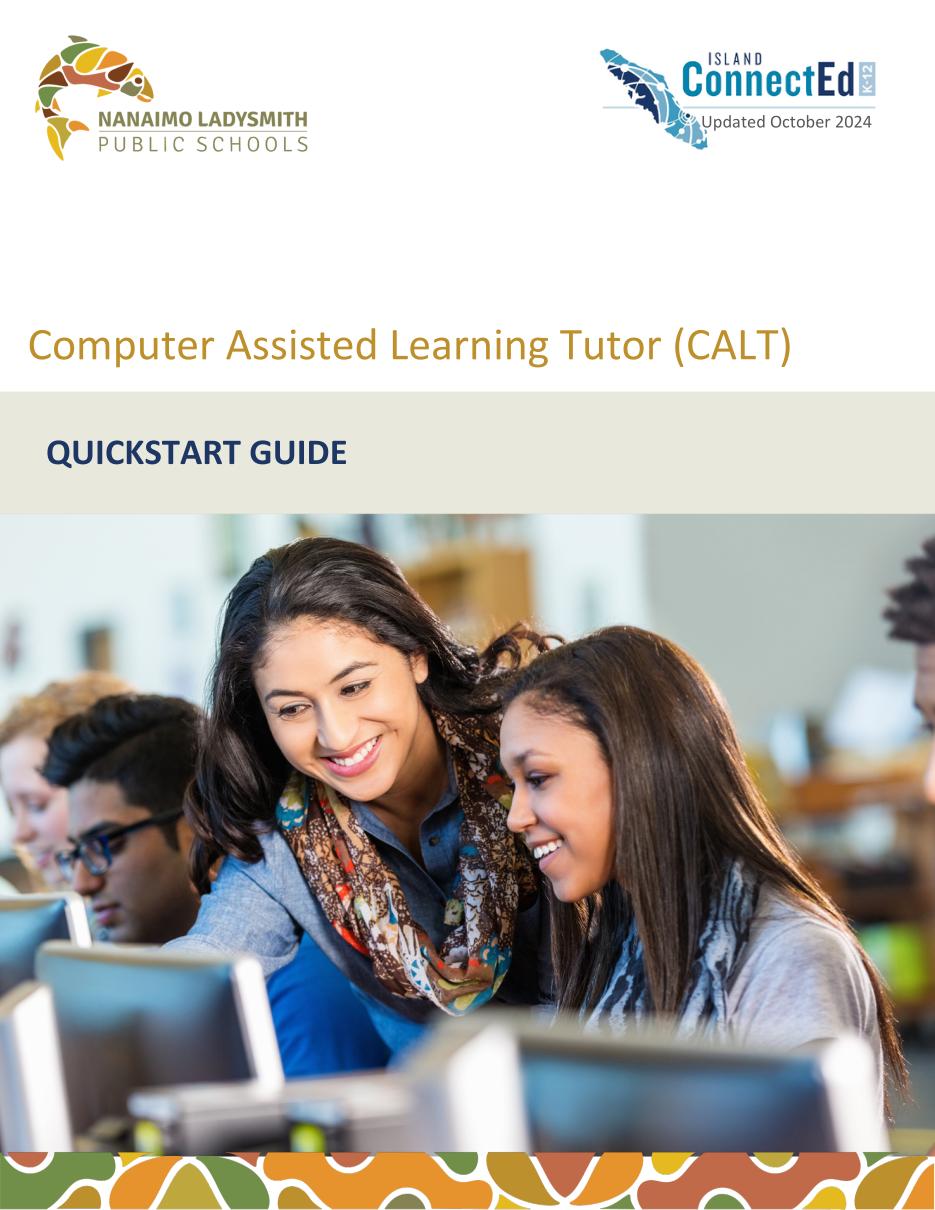
Working within NLPS brand standards, I designed a 14-page modular quick-start guide that combines original job aids, forms, and explanatory pages with authoritative organizational materials. Rather than rewriting source documents, the system gives each type of information a clear visual home so individual modules can be replaced as staff, procedures, platforms, and organizational structures change.
Inside the work
A living manual—not a document frozen in time
The guide uses consistent hierarchy, colour, page architecture, and plain-language sequencing to help a new CALT locate what matters quickly. Original tools support immediate work in the room, while replaceable modules allow multiple stakeholders to keep their own information current without rebuilding the whole manual.
Evidence from the artifact
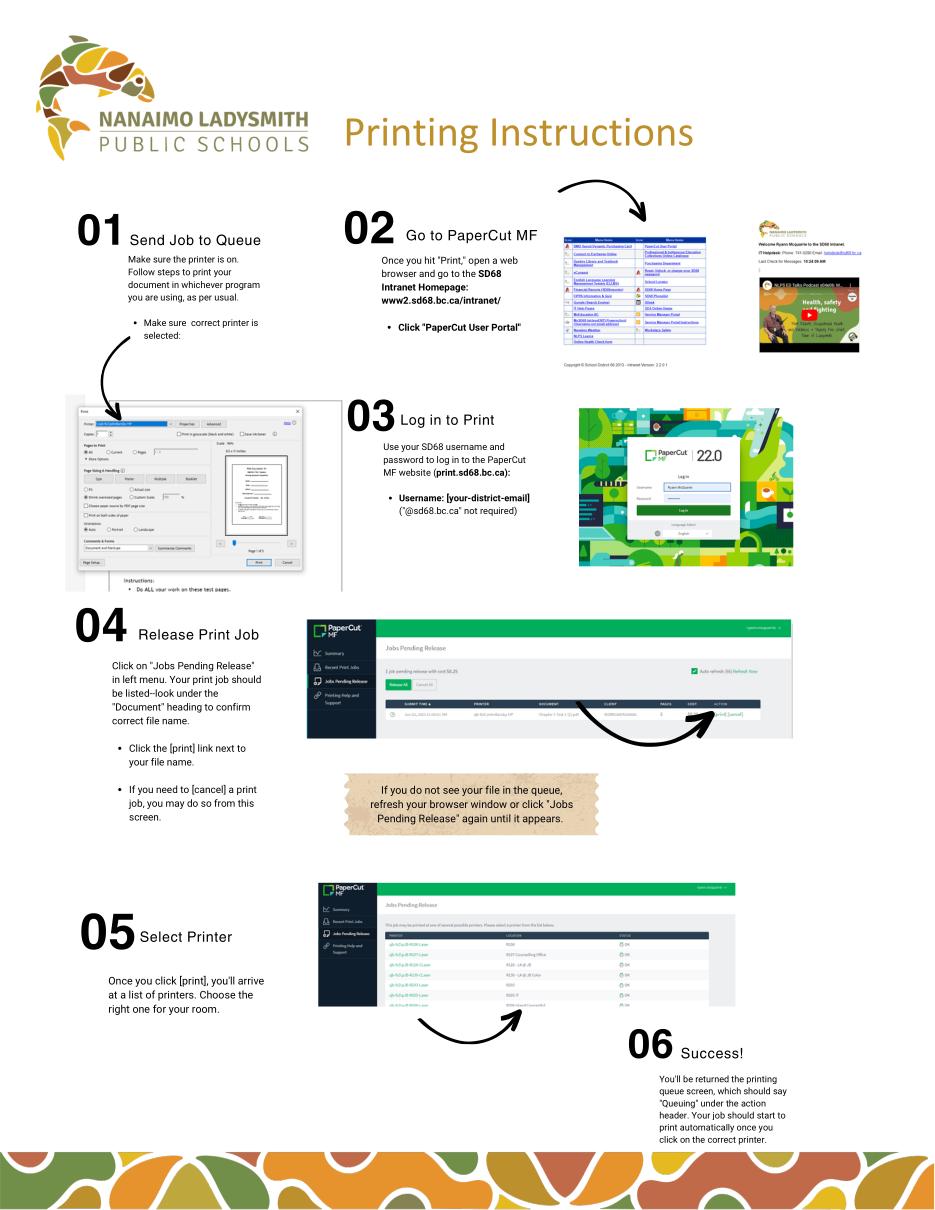
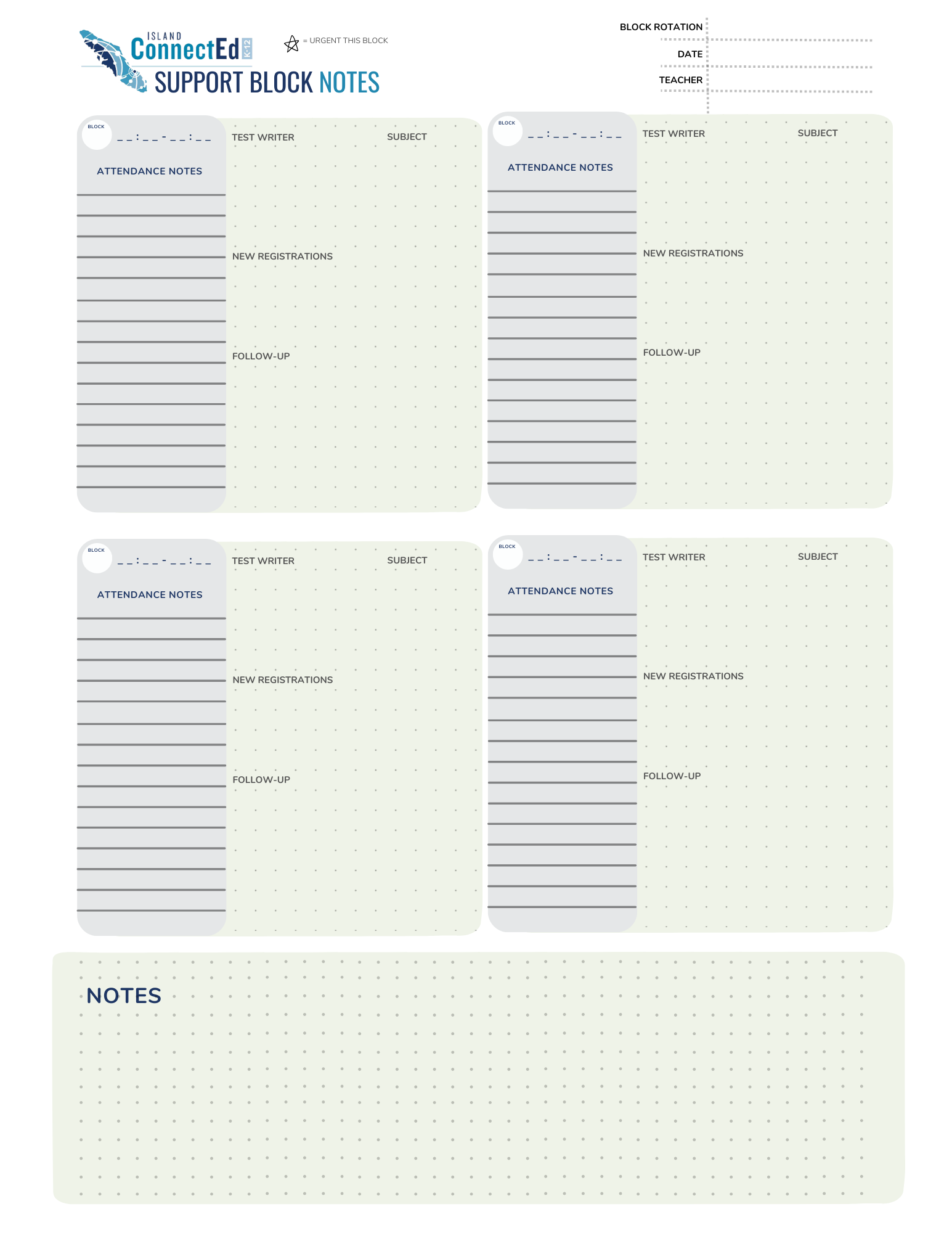
The guide moves from role definition and staff/course information into practical job aids: illustrated printing instructions, visitor and equipment records, daily Support Block Notes, attendance guidance, registration workflows across Vivos, Jupiter, and Canvas, and a student-facing explanation of embedded blocks. Together, the pages support both immediate orientation and reliable daily practice.
What this demonstrates
- 01Information architecture for a complex, changing organization
- 02Onboarding design for casual and on-call education staff
- 03Visual design within established NLPS brand standards
- 04Procedural writing that turns multi-step systems into usable job aids
- 05Creation of practical tools for attendance, follow-up, registration, and continuity
- 06Modular design that supports shared ownership and future updates
- 07Respectful integration of existing NLPS and CUPE source materials
Reflection
The design problem behind this guide felt familiar. Long before I worked in schools, much of my professional life involved taking complicated information, understanding who needed to use it, and finding a clearer way through. What was new was encountering that same kind of problem inside education.
The information a new CALT needed was already there, but it lived across different systems, documents, and organizational sources. My instinct was not to replace any of it, but to build a useful structure around it. I sought input from colleagues, worked with existing materials rather than duplicating them, and designed the guide so that individual pieces could change without requiring someone to rebuild the whole resource.
Looking back, I see this project as an early point of connection between two parts of my professional life that I once thought were separate. I had changed settings, but I had brought the same habits with me: begin with the people who will use the thing, respect what already works, make the complicated easier to navigate, and leave behind something that can remain useful without you.