Case Study 05 · December 2023
Making Neurodivergent Masking Visible
LLL 505 · Inclusive Education
Context
Neurodivergent students may appear to be coping while expending significant effort to hide distress, suppress self-regulating behaviours, or meet social expectations. When that effort remains invisible, educators can miss both the student’s needs and the cost of apparent success.
The artifact
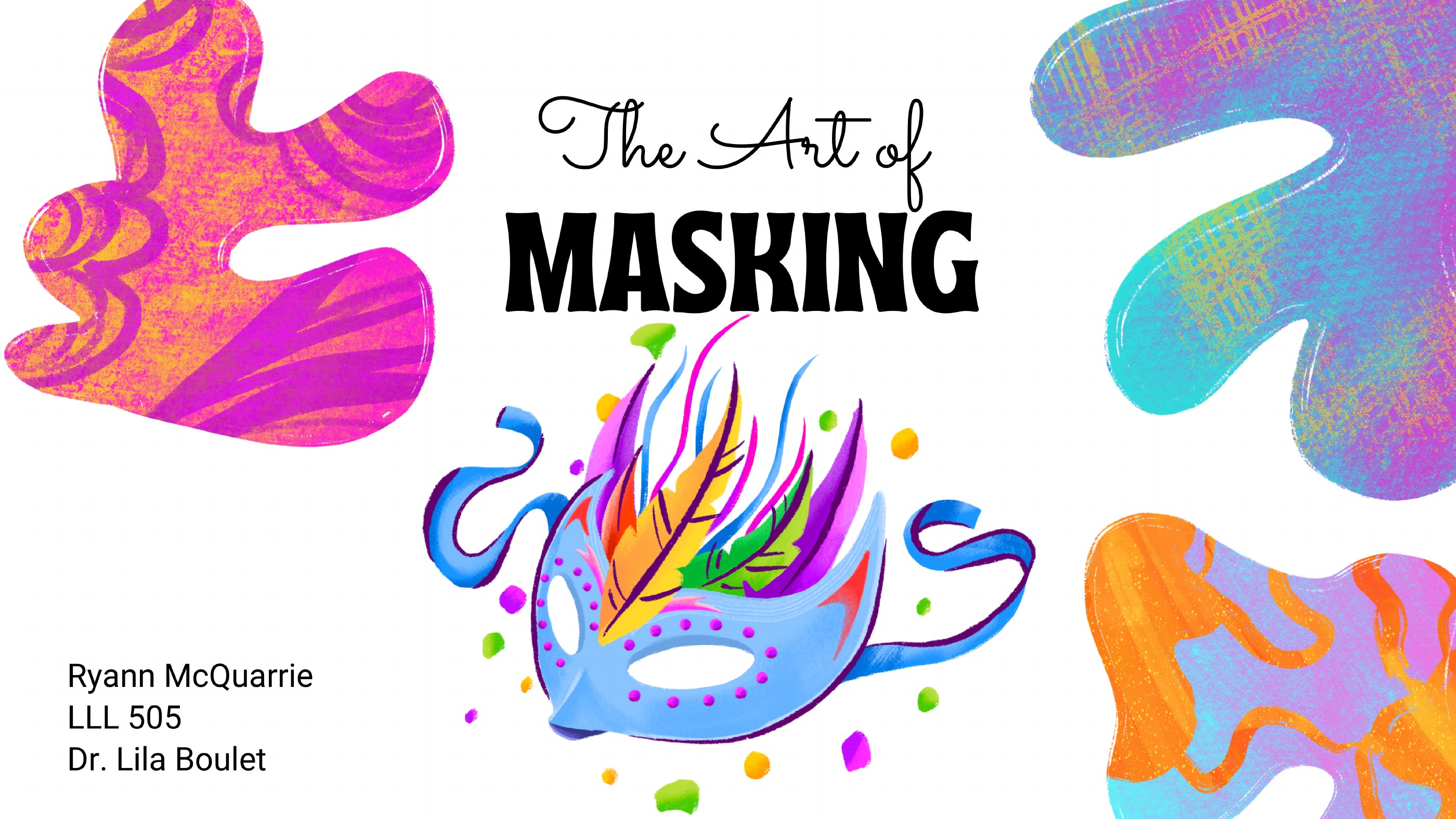
I created an Ignite-style presentation examining social, behavioural, compensatory, and emotional masking. The timed format required the topic to be communicated concisely while maintaining a strengths-based, humane focus on student experience.
The argument inside the presentation
What apparent coping
can conceal.
The presentation distinguishes different ways a learner may mask, then asks educators to consider both the cost and the conditions that make masking feel necessary.
Social masking
Rehearsing, imitating, or monitoring social behaviour in order to appear to fit expected norms.
Behavioural masking
Suppressing stimming, movement, communication differences, or other visible forms of self-regulation.
Compensatory masking
Developing effortful strategies that conceal difficulty without removing the underlying need.
Emotional masking
Hiding anxiety, sensory overload, confusion, or distress while appearing outwardly calm or compliant.
The hidden cost
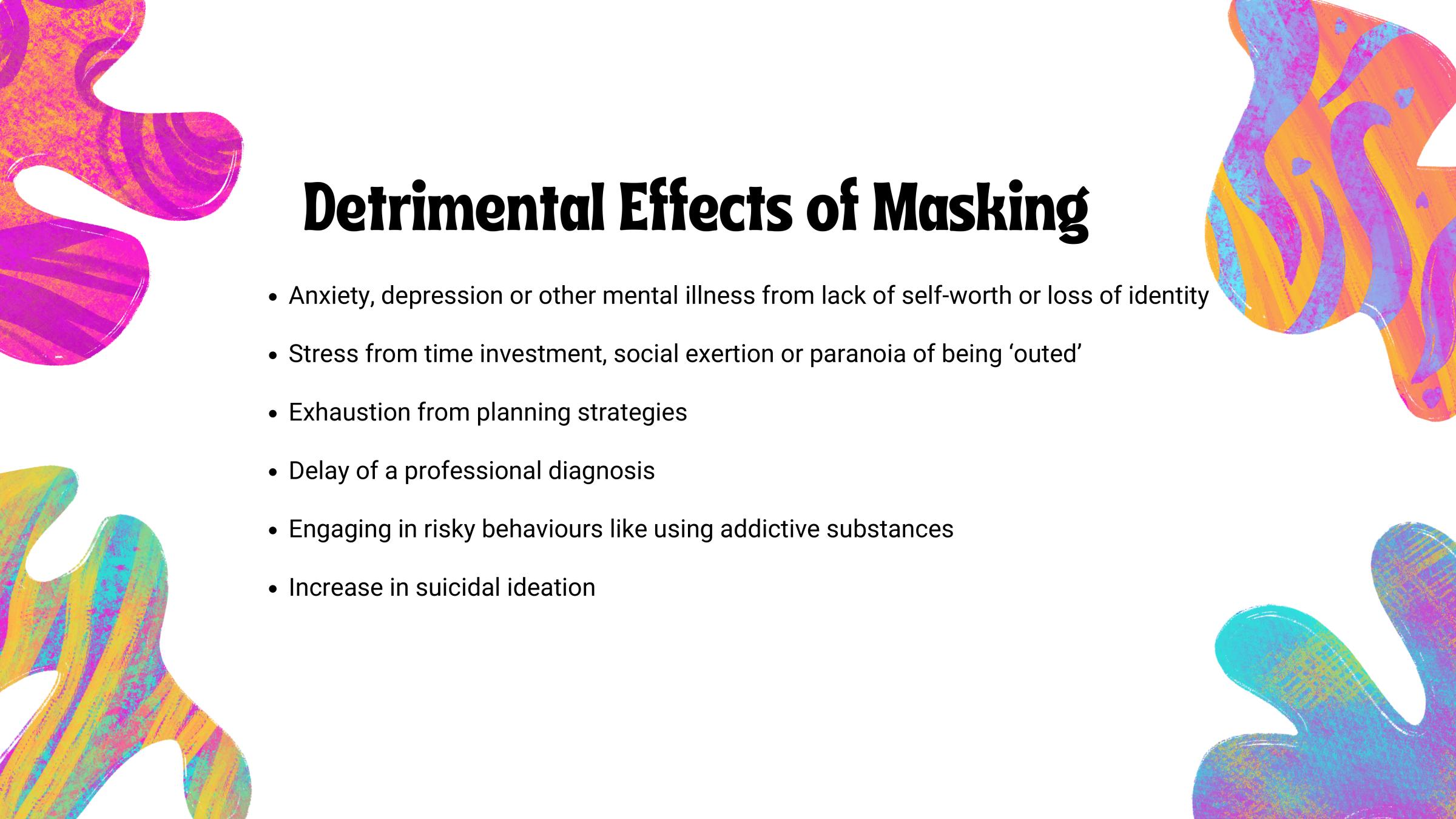
A student who looks successful may be spending extraordinary energy to maintain that appearance. The presentation connects this hidden effort with exhaustion, stress, anxiety, reduced self-understanding, and threats to identity and mental health.
Classroom response
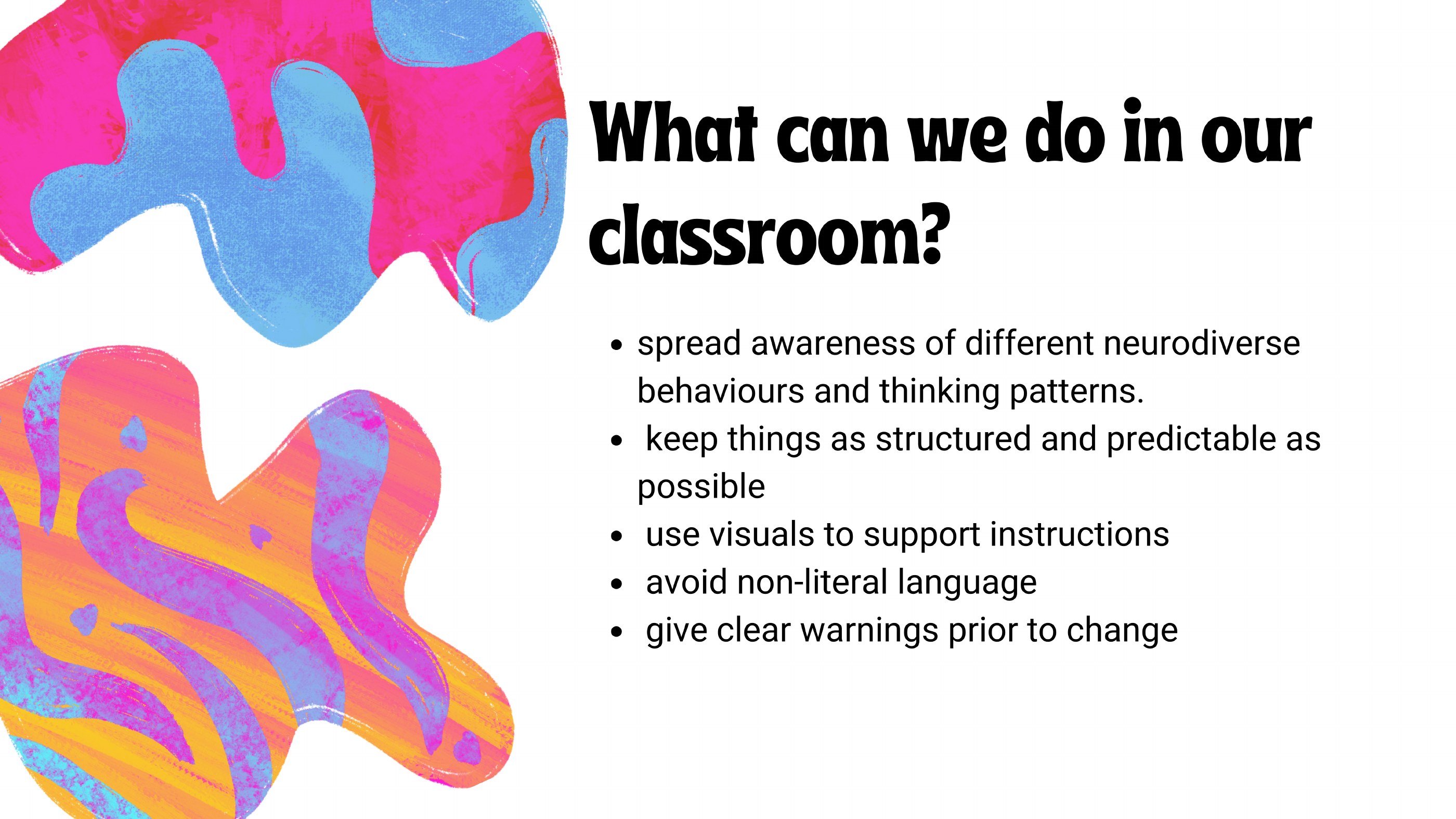
- Build awareness of neurodiverse behaviours and thinking patterns.
- Keep routines structured and predictable where possible.
- Use visuals to support spoken instructions.
- Prefer clear, literal language when ambiguity creates a barrier.
- Give explicit warning before transitions and change.
Inside the work
What masking costs—and what classrooms can change
Masking can make a struggling student look successful. These slides move from the toll of sustained concealment—on identity, mental health, energy, and access to diagnosis—to practical changes educators can make through clearer language, visual supports, predictable routines, and advance notice of change.
Evidence from the artifact
The presentation defines different forms of masking, describes how they may appear in schools, and connects hidden effort with stress, anxiety, identity, and mental health. It invites educators to look beyond outward compliance and consider what a student may be managing internally.
What this demonstrates
- 01Advocacy for neurodivergent learners
- 02Recognition of needs that may be hidden by compliance
- 03Strengths-based and student-centred communication
- 04Synthesis of a complex topic within a constrained format
- 05Connection of behaviour, regulation, identity, and wellbeing
- 06Reflective attention to inclusive classroom conditions
Reflection
This work strengthened my conviction that behaviour cannot be interpreted accurately without curiosity about context, effort, sensory experience, and belonging.
I would continue refining the language in partnership with neurodivergent voices and current research. The professional responsibility remains clear: a student should not need to become less visibly themselves in order to be recognized as successful at school.