Case Study 01 · 2023–2024
Designing a Literacy-Rich After-School Program
École Hammond Bay Elementary · French Immersion
Context
I developed this resource book for the Seamless Day after-school care program, serving up to 24 students from Kindergarten to Grade 7. The program drew on the school library, gym, playground, classroom, and the neighbouring trails and shoreline at Neck Point.
The artifact
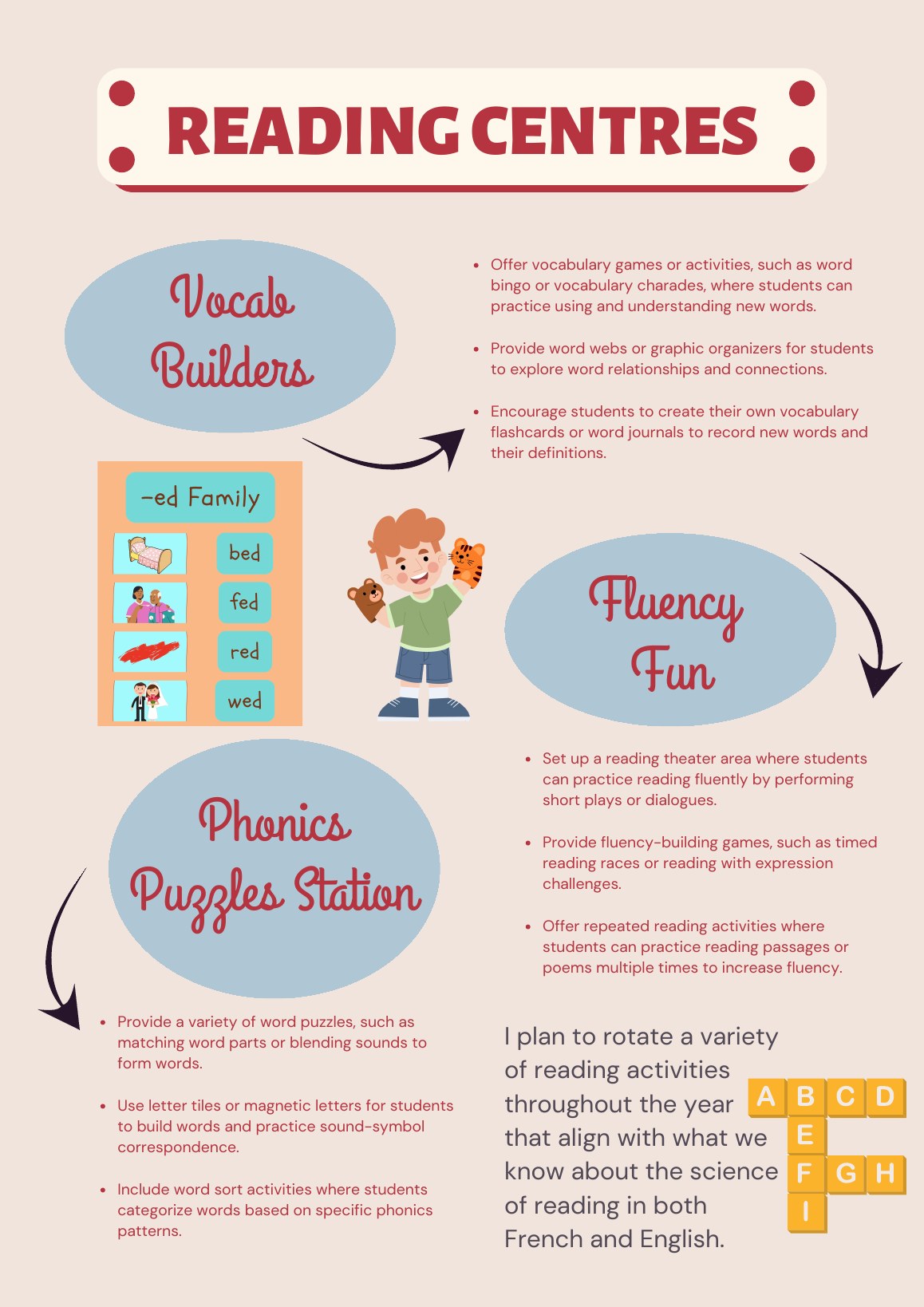
The 17-page staff guide combines program organization with practical literacy planning. It outlines the daily rhythm and available learning environments, gathers French-language and structured-literacy resources, and proposes reading and writing activities differentiated for children ages 4–7, 8–10, and 11–13.
Inside the work
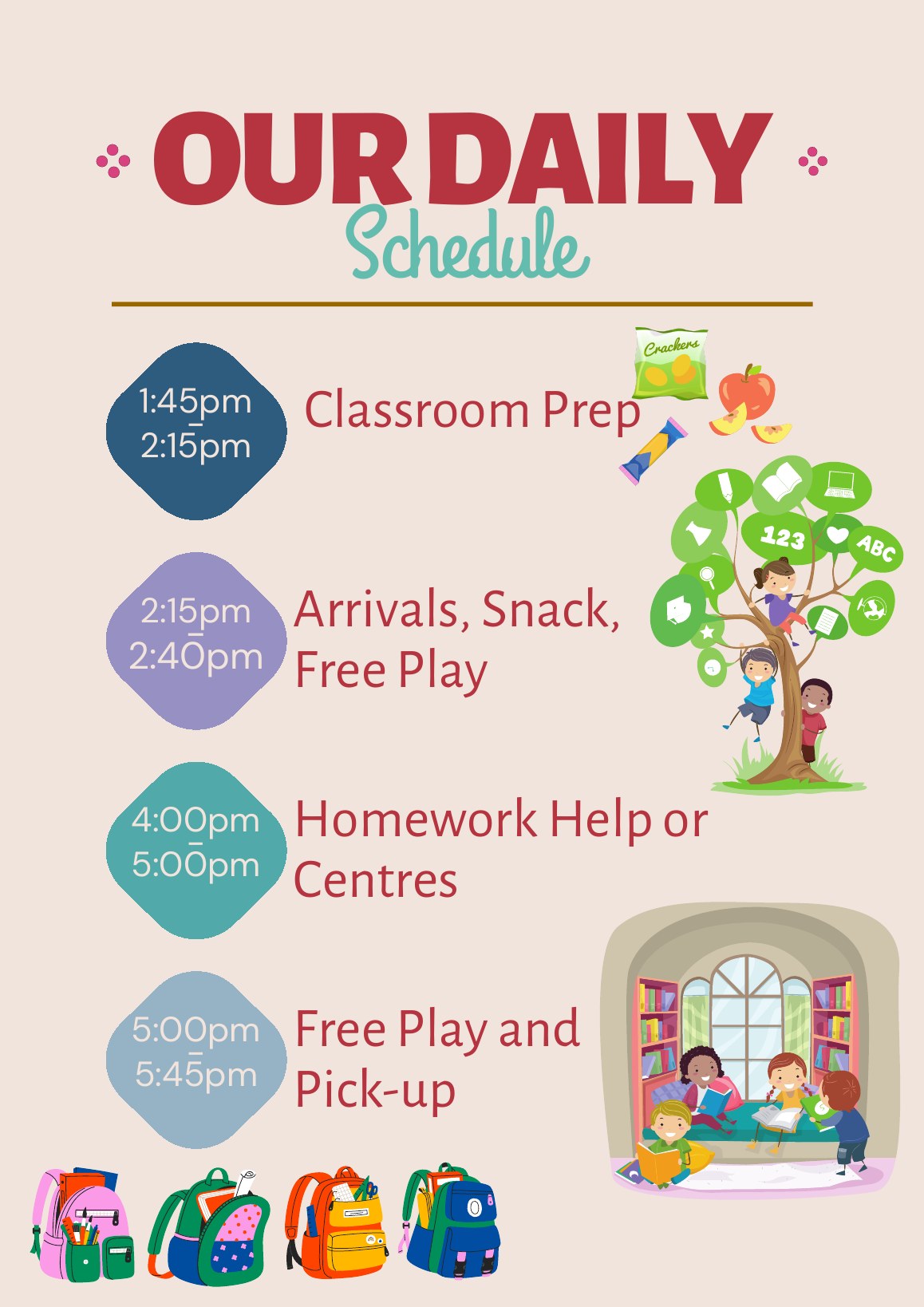
A daily rhythm built around literacy, movement, and choice
A clear daily rhythm gave children predictability without making the program rigid. Mixed-age reading centres then turned the library, classroom, outdoor spaces, and peer relationships into opportunities for purposeful literacy learning.
Evidence from the artifact
The opening pages establish the purpose, rhythm, and physical possibilities of the program. The literacy pages move from rationale to application: French Immersion and literacy, outdoor literacy at Neck Point, differentiated phonics and writing games, and rotating reading and writing centres.
What this demonstrates
- 01Program design across a wide developmental range
- 02Translation of literacy research into usable activities
- 03Differentiation by age, language, setting, and independence
- 04Integration of play, movement, nature, literacy, and choice
- 05Resource curation for a bilingual school community
- 06Visual communication and practical staff-facing design
- 07Initiative: identifying what a new program needed and building it
Reflection
This artifact represents an early stage in my movement from knowing about literacy instruction to designing conditions in which literacy could happen. I was thinking simultaneously about children, staff, space, time, materials, language, and developmental range.
Looking at it now, I would tighten some claims, verify and expand the references, distinguish more carefully between phonemic awareness, phonics, sight-word recognition, fluency, and print automaticity, and connect a smaller set of activities to clearer instructional purposes. I would also make student choice and accessibility more explicit.
I would retain its central instinct: literacy does not need to be confined to a desk, a worksheet, or even a classroom. It can happen through stories under trees, word play in the gym, mixed-age reading partnerships, comics, debates, nature journals, and children making something worth sharing.