Case Study 03 · Spring 2024
Making Early Literacy Research Accessible to Families
LLL 508 · Emergent Literacy
Context
Families are essential partners in literacy development, but the language of reading research can create distance instead of confidence. This project asked how evidence from the Science of Reading and structured literacy could become welcoming, useful guidance for parents and caregivers.
The artifact
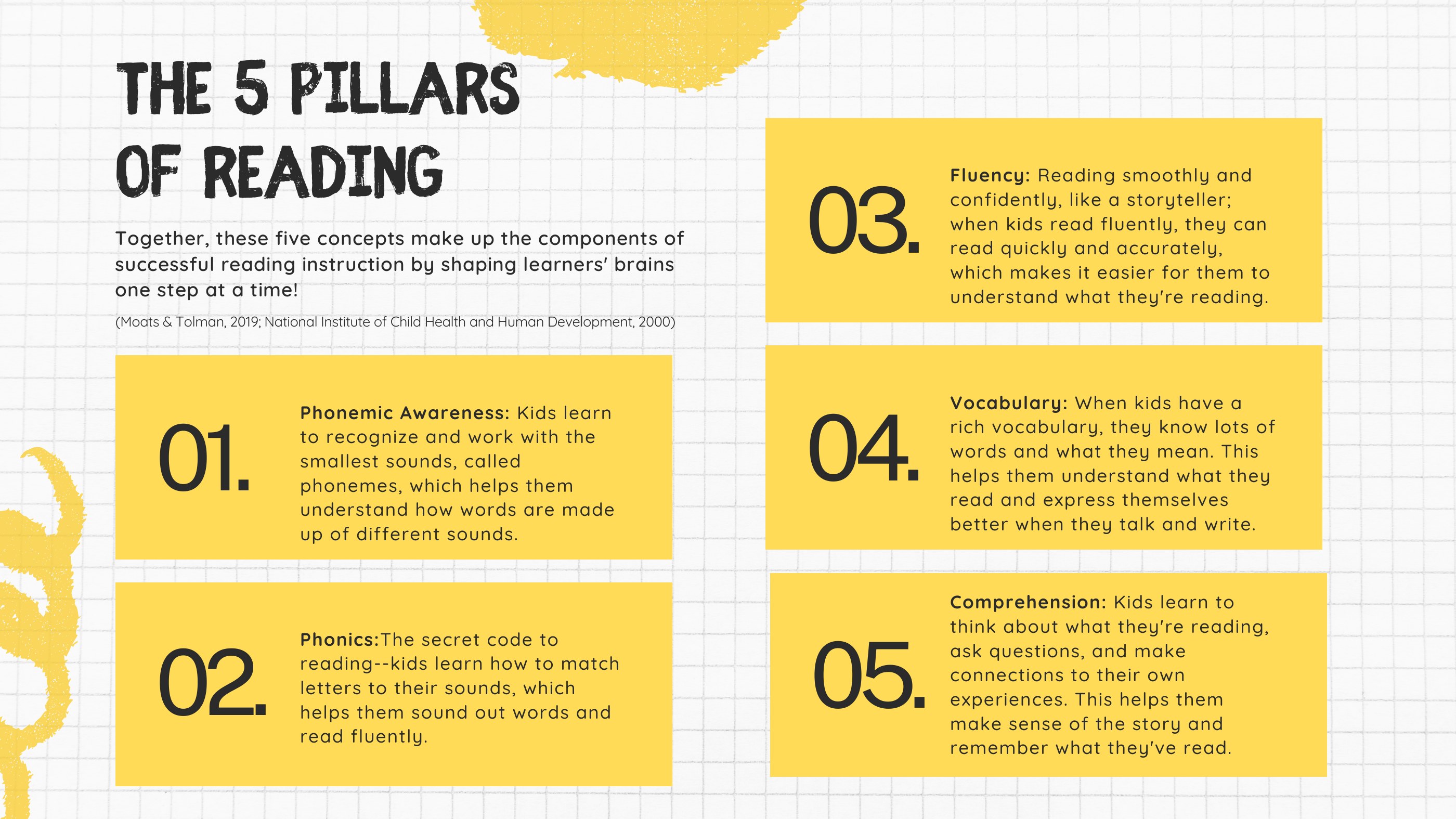
I designed and scripted an early literacy workshop that explains foundational concepts—including decoding, phonemic awareness, phonological awareness, phonics, fluency, vocabulary, and comprehension—and pairs them with practical activities families can use at home.
Inside the work
Reading science families can understand—and use
Families do not need specialist vocabulary to become confident literacy partners. The workshop makes the foundations of reading visible, explains why they matter, and connects each concept with realistic support at home.
Evidence from the artifact
The presentation moves from the purpose of reading instruction to clear definitions, the five pillars of reading, structured literacy, and realistic ways adults can support a child’s reading journey. The script demonstrates careful audience translation: enough precision to be trustworthy without assuming specialist knowledge.
Related UBC resource · ECED 401
An earlier step in the same direction
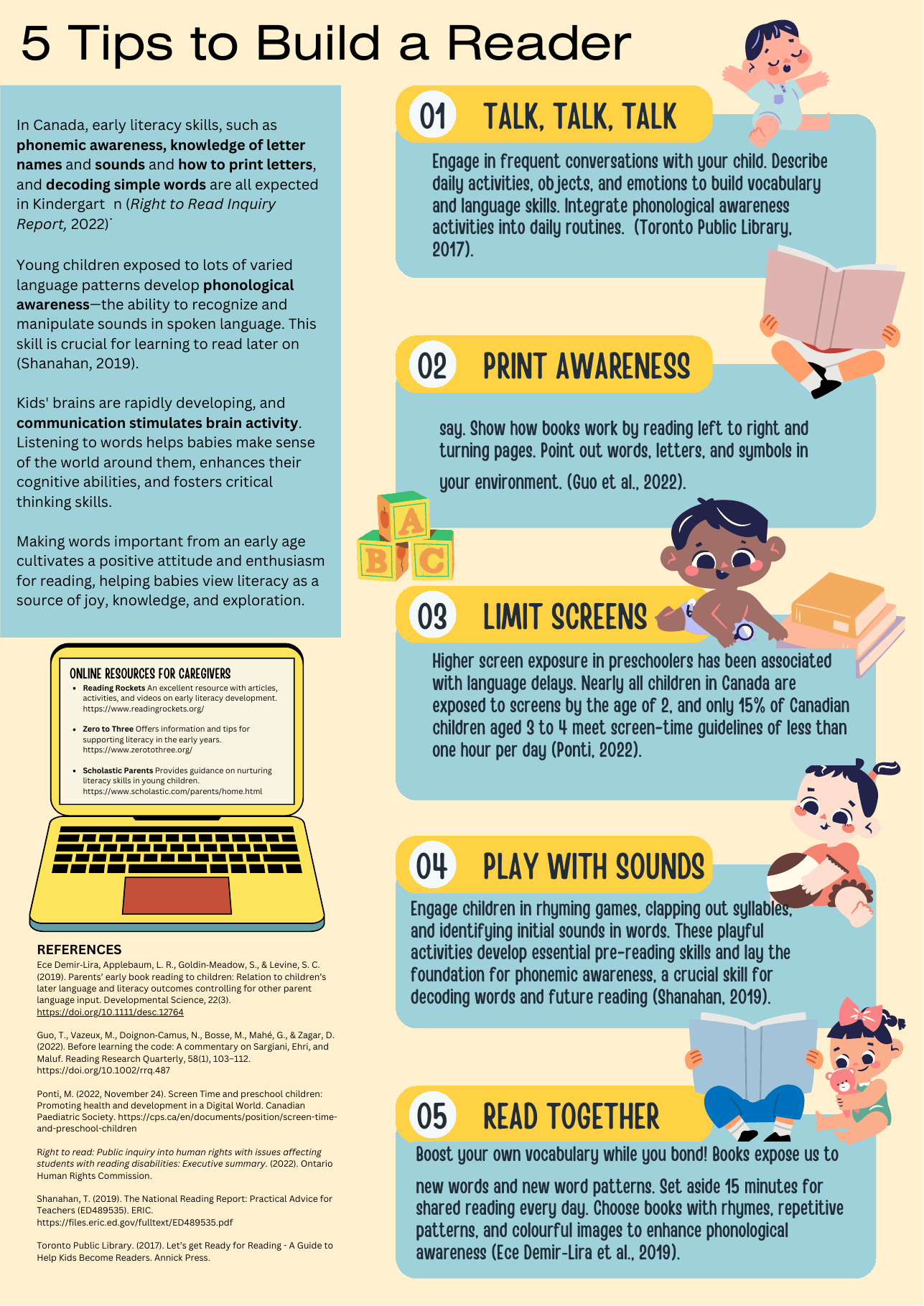
Created during my UBC ECEA coursework, this one-page caregiver resource translates early-literacy research into five concrete practices families can use: conversation, print awareness, thoughtful limits on screens, sound play, and shared reading. It shows an earlier stage of the same through-line developed more fully in the workshop—making research understandable, welcoming, and useful beyond the classroom. Placed together, the two artifacts show the same commitment at different points in my learning: making literacy knowledge practical enough to enter family life.
Open one-page resource ↗What this demonstrates
- 01Knowledge translation for a non-specialist audience
- 02Family engagement grounded in respect and practicality
- 03Clear explanation of foundational literacy concepts
- 04Workshop planning and multimodal presentation design
- 05Connection of research with usable home activities
- 06Designing bridges between school-based learning and home practice
Reflection
My communications background made me comfortable translating complex information for a non-specialist audience. What has changed through my literacy studies and classroom experience is my understanding of what must survive that translation.
Making reading research accessible to families does not mean making it simplistic. Parents do not need every piece of professional terminology, but they deserve an accurate explanation of what their child is learning, why it matters, and what meaningful support can look like at home. The challenge is deciding what to clarify, what to retain, and what to turn into something a family can actually use.
I now see family communication as part of literacy instruction—not something adjacent to it. When families understand the purpose behind classroom practice, they are better positioned to participate in their child’s learning without being asked to become reading specialists themselves.