Case Study 07 · August 2023
Designing Professional Learning That Gets Implemented
LLL 503 · Collegial Conversations
Context
Professional learning can be thoughtful, relevant, and well received—and still fail to change practice. This collegial-conversation project asked what helps new knowledge capture teachers’ interest, respond to their actual needs, and move from a presentation into sustained classroom implementation.
The artifact
I designed Left on Read as a proposal for a year-long professional-learning sequence focused on structured writing across content areas. The plan combines a teacher needs assessment, Joyce and Showers’ stages of professional development, six optional Lunch & Learn sessions, practical resources, peer collaboration, follow-up, and measures of engagement. It was a leadership design proposal, not a sequence I subsequently delivered.
Inside the work
From one conversation to a year of supported implementation
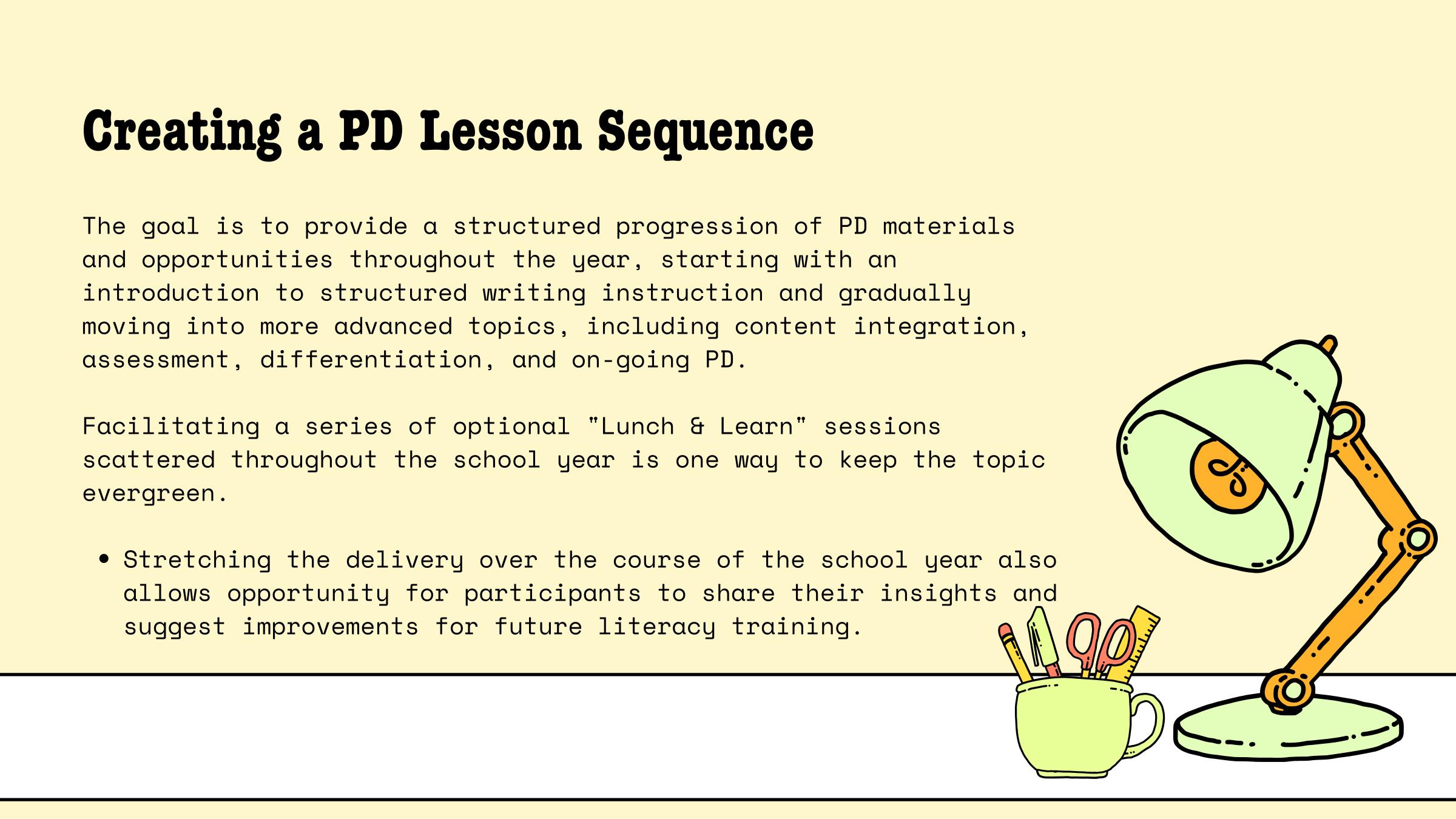
Rather than treating professional development as a single event, the proposal builds time for teachers to understand the rationale, try strategies in their own contexts, discuss what happened, refine their practice, and sustain the work together.
Evidence from the artifact
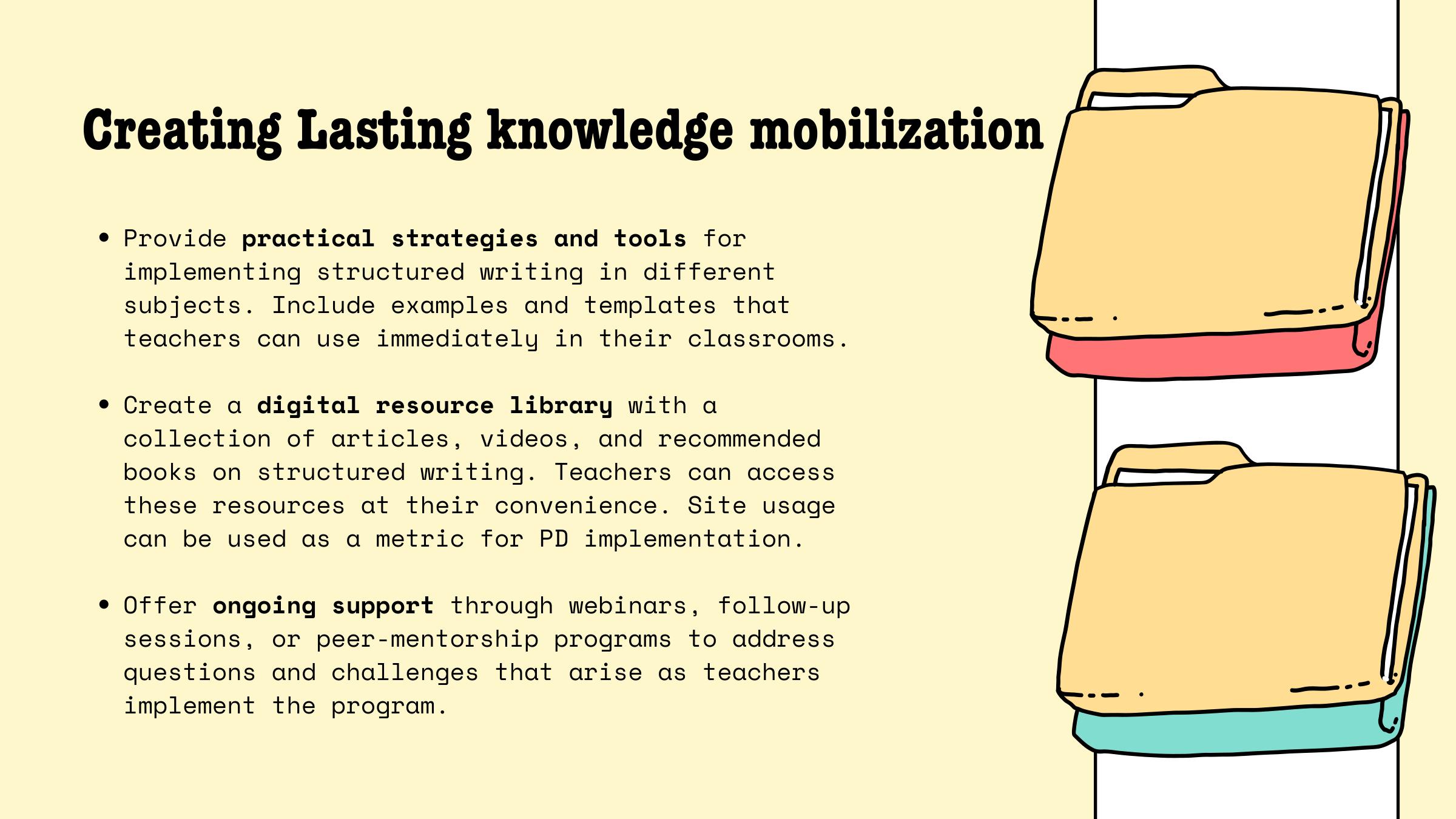
The sequence progresses from an introduction to structured writing into subject-specific integration, assessment and feedback, differentiation, writing for different purposes and audiences, and long-term collaboration. Implementation supports include classroom-ready tools, a digital resource library, site-use data, follow-up sessions, peer mentorship, observation, cross-school networking, and periodic check-ins.
What this demonstrates
- 01Professional-learning design grounded in adult needs and real implementation conditions
- 02Application of Joyce and Showers’ stages of teacher development
- 03Year-long sequencing rather than one-off professional development
- 04Connection of structured writing with disciplinary literacy across content areas
- 05Planning for assessment, differentiation, collaboration, and sustainability
- 06Use of multiple forms of evidence to make knowledge mobilization observable
- 07Facilitation grounded in collegial inquiry rather than assumed expertise
Reflection
I was nervous about this assignment. The final slide even says so.
I was proposing professional learning for experienced educators while I was still relatively new to working in schools, and I was very aware of that. Looking at the project now, I think that discomfort led me toward the right question: instead of assuming I knew what teachers needed, I built the proposal around asking them.
The year-long sequence was never delivered, so I cannot say whether it would have worked. What I can see in it is the beginning of an interest that has stayed with me: why some professional learning becomes part of everyday practice while other good ideas disappear as soon as the workshop ends.
If I were developing it now, I would start smaller. I would ask teachers what problem they were actually trying to solve, build the first sessions with them, and pay attention to what they used afterward. Then I would decide what came next.