Case Study 04 · 2024
Music on Our Minds: Language Learning Through Music
LLL 509 · Additional Language Acquisition
Context
Working in a French Immersion after-school program prompted a question at the intersection of two symbol systems: how might rhythm, pitch, melody, and song support phonological awareness, pronunciation, fluency, memory, and cultural understanding in an additional language?
The artifact
The inquiry began as a choice-project proposal and developed into a 17-slide research presentation. Music on Our Minds synthesizes evidence about the cognitive and neural relationships between music, literacy, and language, then translates that research into practical strategies for additional-language classrooms.
Inside the work
From auditory processing to classroom practice
Music asks learners to notice, remember, imitate, and reproduce patterns in sound—many of the same processes involved in language learning. The finished project connects that research with accessible applications using singing, lyrics, rhythm, movement, and familiar music.
Evidence from the artifact
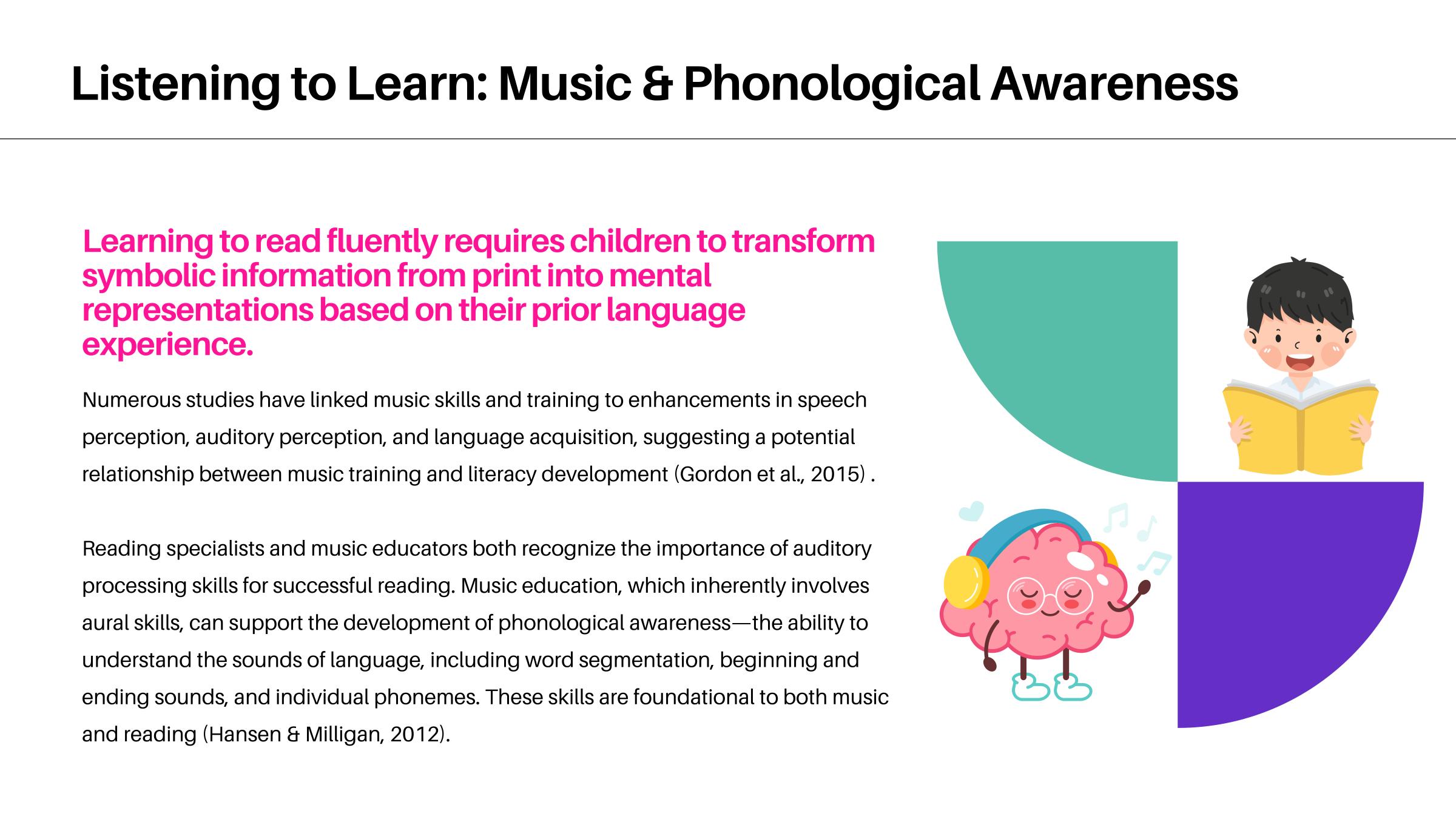
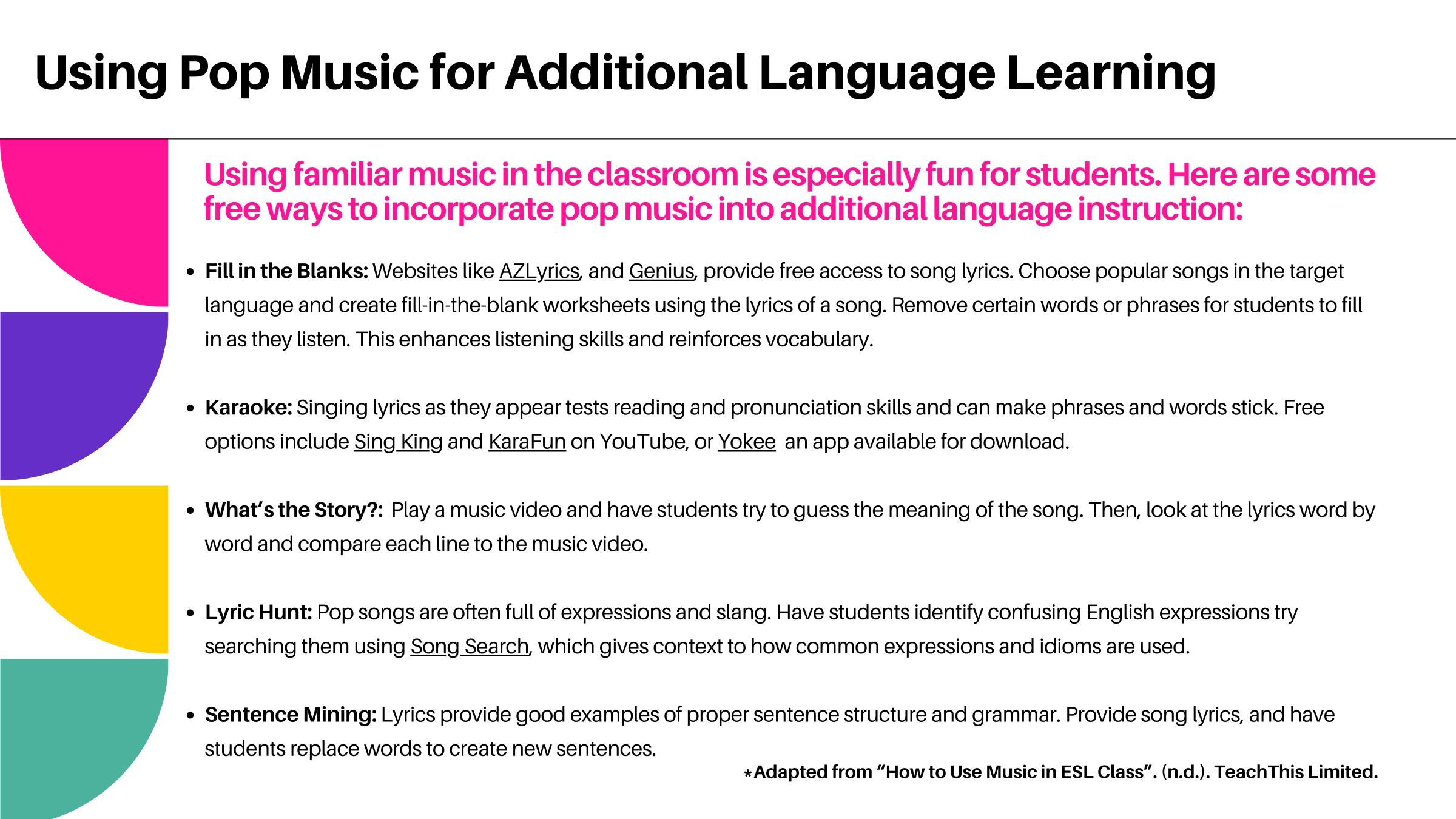
The finished presentation examines shared decoding processes in written language and musical notation, neural overlap in word and score reading, music’s relationship with phonological awareness, and the transfer of auditory discrimination and memory skills into language learning. It then offers concrete classroom applications, including lyric translation, songwriting, movement, karaoke, listening comprehension, and sentence mining.
What this demonstrates
- 01Interdisciplinary inquiry across music and language learning
- 02Synthesis of cognitive, neurological, literacy, and language research
- 03Attention to pronunciation, fluency, memory, and phonological awareness
- 04Translation of research into practical classroom strategies
- 05Culturally responsive and student-centred possibilities in music selection
- 06Development of an initial proposal into a complete educational resource
Reflection
This project reflects the kind of question that energizes my practice: one that begins with children’s interests and opens into research, cognition, culture, and design. The move from proposal to finished presentation also shows how I work best—begin broadly, follow the strongest lines of inquiry, then reshape the research into something other educators can use.
Its next stage would require narrowing the intervention, defining observable outcomes, and working closely with additional-language educators. The enduring idea is that rhythm, song, and story can offer meaningful—and joyful—routes into the sounds and patterns of another language.