I bought a package of origami-star paper because I thought it would be a good activity to try. It came with 1,000 narrow strips of paper and instructions for making tiny puffy stars, which looked easy enough that I fully expected to figure it out in a few minutes.
I did not.
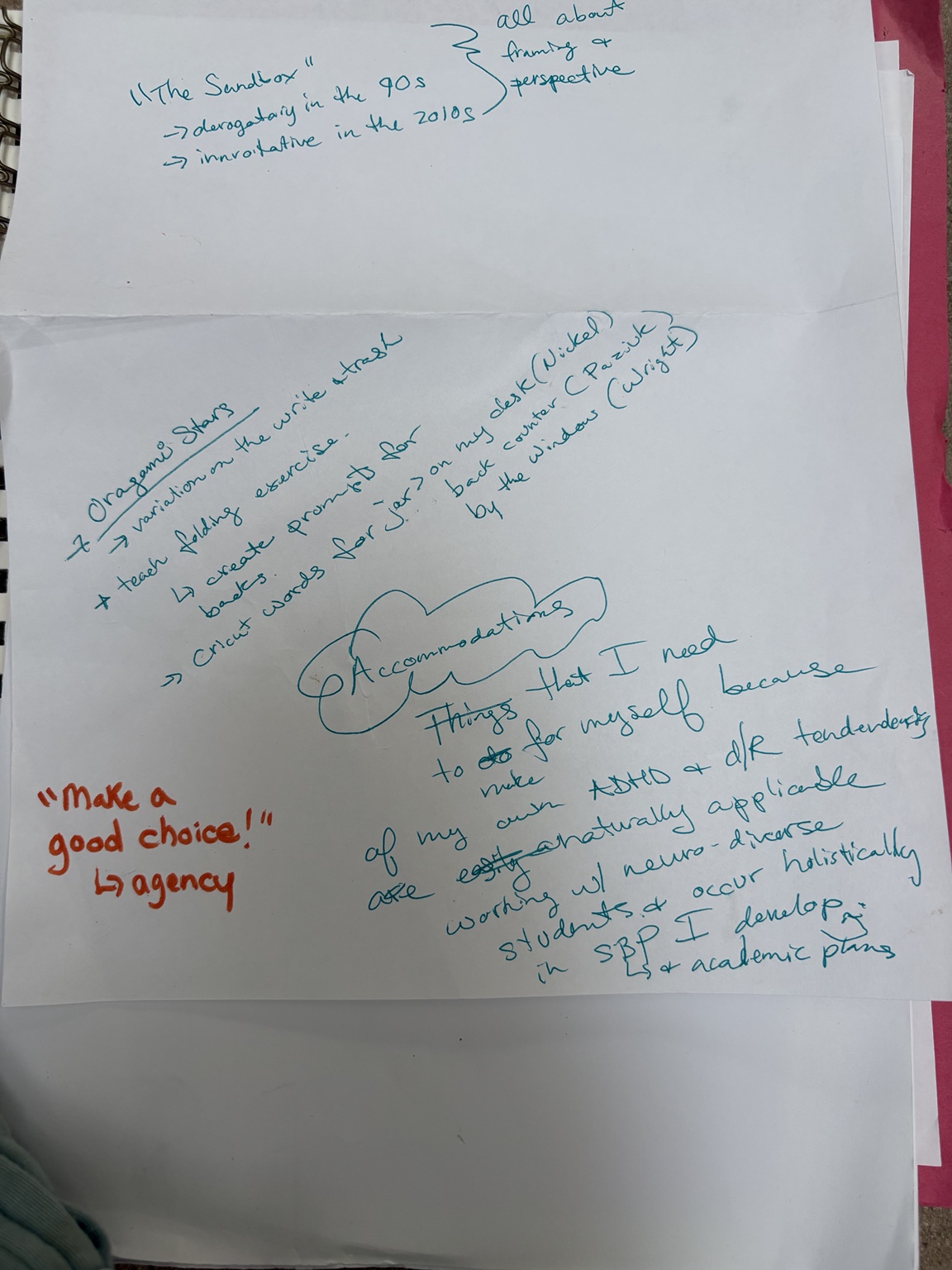
Somewhere between rereading the directions, trying again, and ending up with another vaguely star-adjacent lump, I started writing all over my notes. What interested me was not really the origami anymore. I was thinking about how quickly a task that looks simple from the outside can become frustrating once you are the person who cannot quite figure out what everyone else seems to understand.
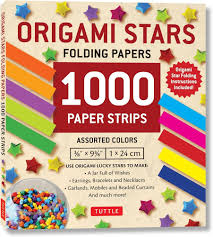
Origami Stars: Folding Papers — 1000 Paper Strips. I bought this kit for the activity. I still have not successfully made one.
The task
The materials could hardly be simpler: one strip of paper and a sequence of folds. The task itself asked for much more. I had to follow directions I did not yet understand, remember what came next, manipulate a tiny piece of paper accurately, make sense of diagrams that were not helping me nearly as much as they appeared to think they were, and keep going after the result stopped resembling the picture.
None of this mattered very much. I am an adult, nobody was grading the star, and there was no consequence if I gave up. I was still annoyed enough to notice how much attention the frustration itself was taking.
That was the part I wanted to remember.
Structure
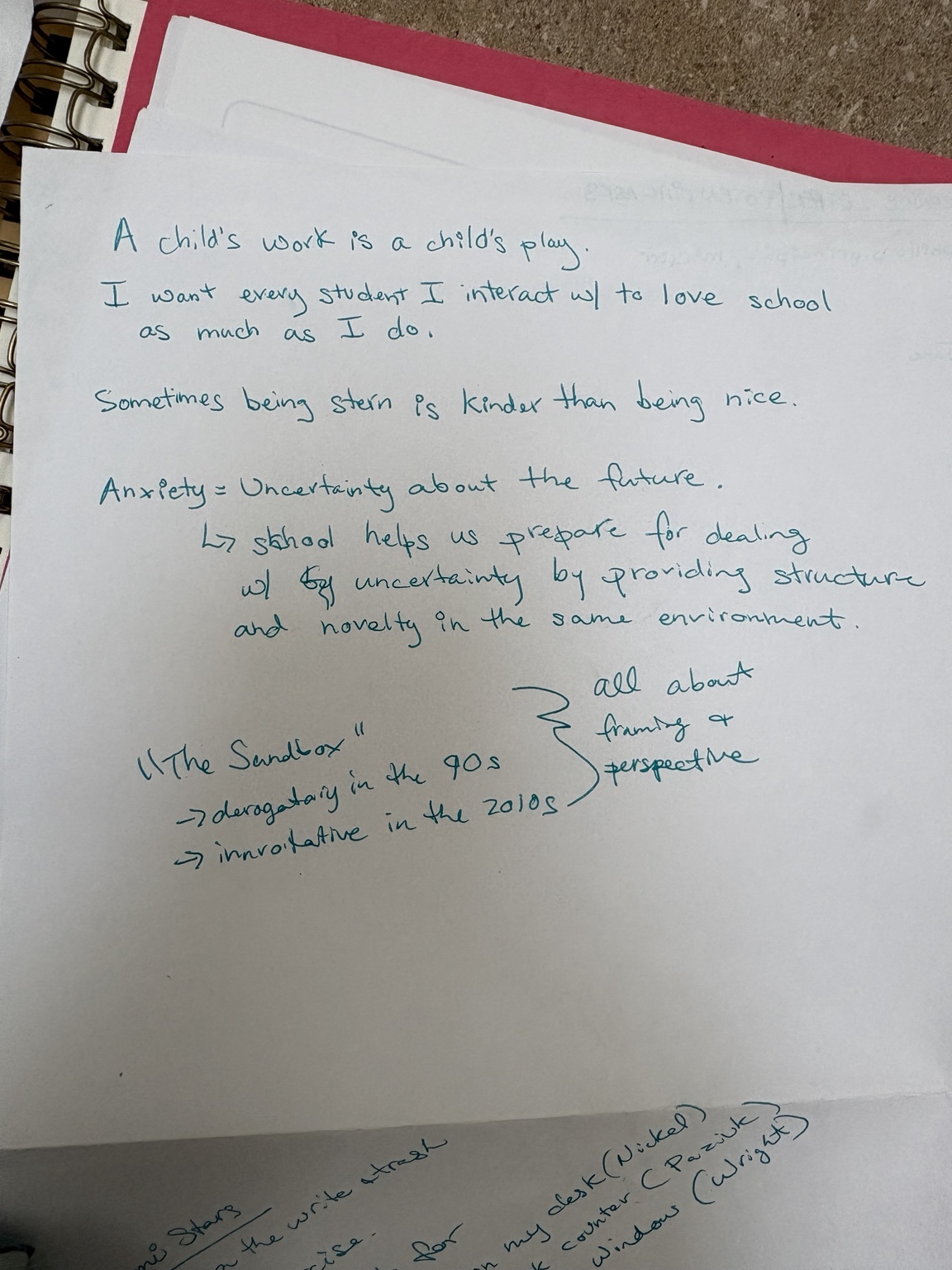
One of the things I wrote down was that anxiety can come from not knowing what happens next. I would not use that as any kind of definition, but in the moment it helped me think about why structure matters.
If I am already using most of my attention trying to work out what I am supposed to do, there is less left for the task itself. Seeing the first step, knowing roughly where I am going, or having an example to compare against does not remove the difficulty, but it gives me a foothold.
I think that is part of why visible schedules, models, routines, and clear beginnings can matter so much in classrooms. They do not need to make everything predictable; they can simply reduce the amount of uncertainty a learner has to manage at the same time.
Choice
My notes also wander into choice, especially the phrase “make a good choice,” which adults use constantly with children.
Sometimes there really is a choice. Sometimes there is one acceptable answer and we are dressing it up as a choice because it sounds nicer.
If recess is over, a child has to come inside. Asking “Would you like to come in now?” is not especially meaningful if the answer cannot actually be no. There may still be genuine choices around the edge of the situation — walk beside me or ahead, carry the ball or put it away first, hang up your coat before changing your shoes — but those only count as choices if either answer is genuinely acceptable.
That distinction matters to me because I think children know when the adult has already decided. I would rather be clear about what is fixed and then look for the places where I can actually hand some control back.
Boundaries
I also wrote, “sometimes being stern is kinder than being nice,” which is not quite what I mean now. I think the word I was reaching for was clear.
I have seen situations where an adult keeps negotiating because they are trying very hard to sound kind, while the child becomes less certain about what is actually expected. Sometimes a calm “I know you do not want to, and we still have to go” is easier to understand than another round of questions and persuasion.
The tone can still be warm. The child can still get help. I just do not think every boundary needs to be disguised as a negotiation.
What I kept
I still have not made the star successfully, although with 1,000 strips of paper I suppose the odds remain in my favour.
What I did get from the activity was two pages of messy notes about frustration, uncertainty, structure, and choice. I kept them because they remind me how easy it is to underestimate what a small task is asking of someone when I am not the person struggling with it.
That is probably the most useful part of the exercise for me.