Case Study 02 · 2023–2025
From Theory to Practice: Planning for the Learners in Front of Me
Graduate coursework · Kindergarten practice
Context
A graduate planning exercise met the realities of kindergarten practice. Comparing what was planned with what actually happened helped me understand planning as a flexible framework shaped by observation, readiness, relationships, and professional judgment.
The artifact
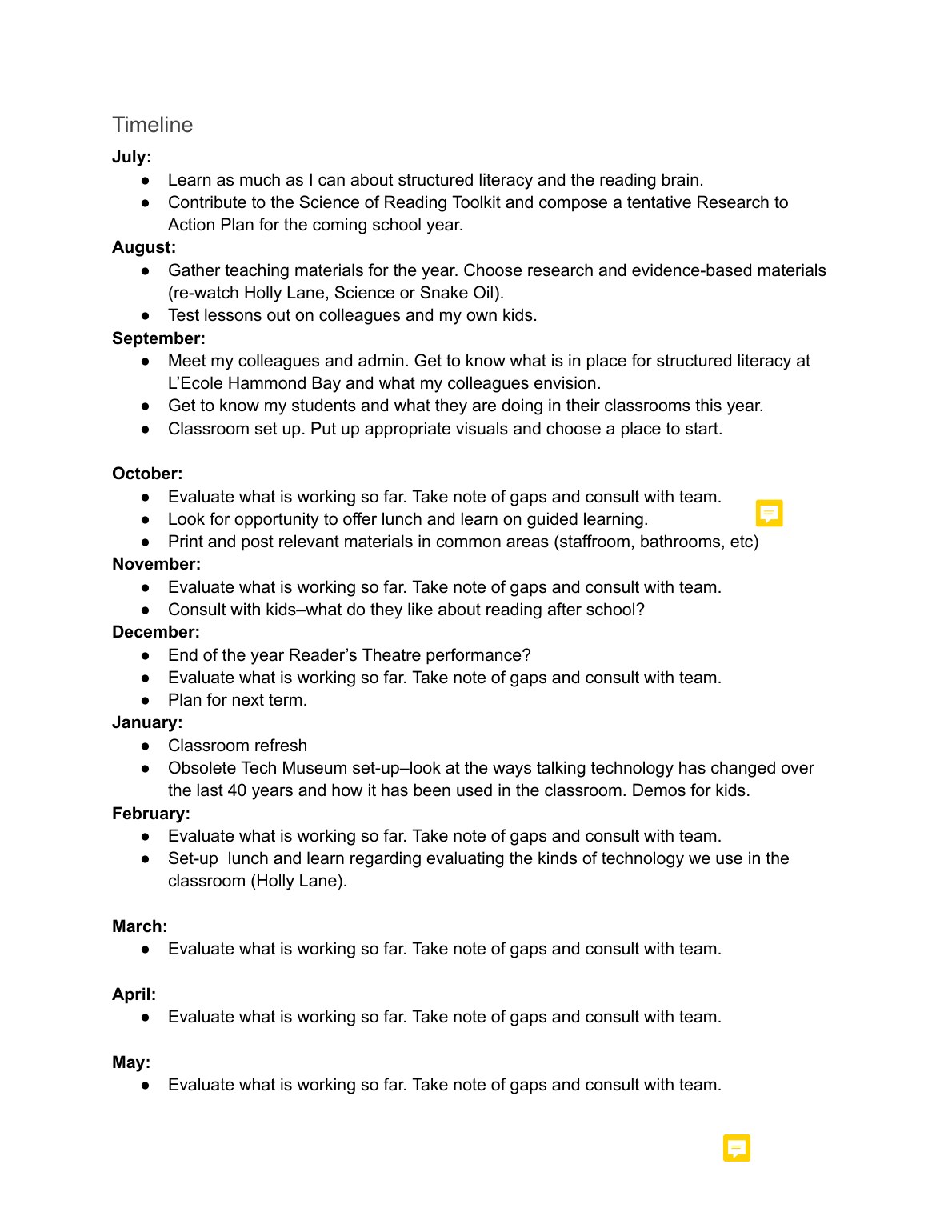
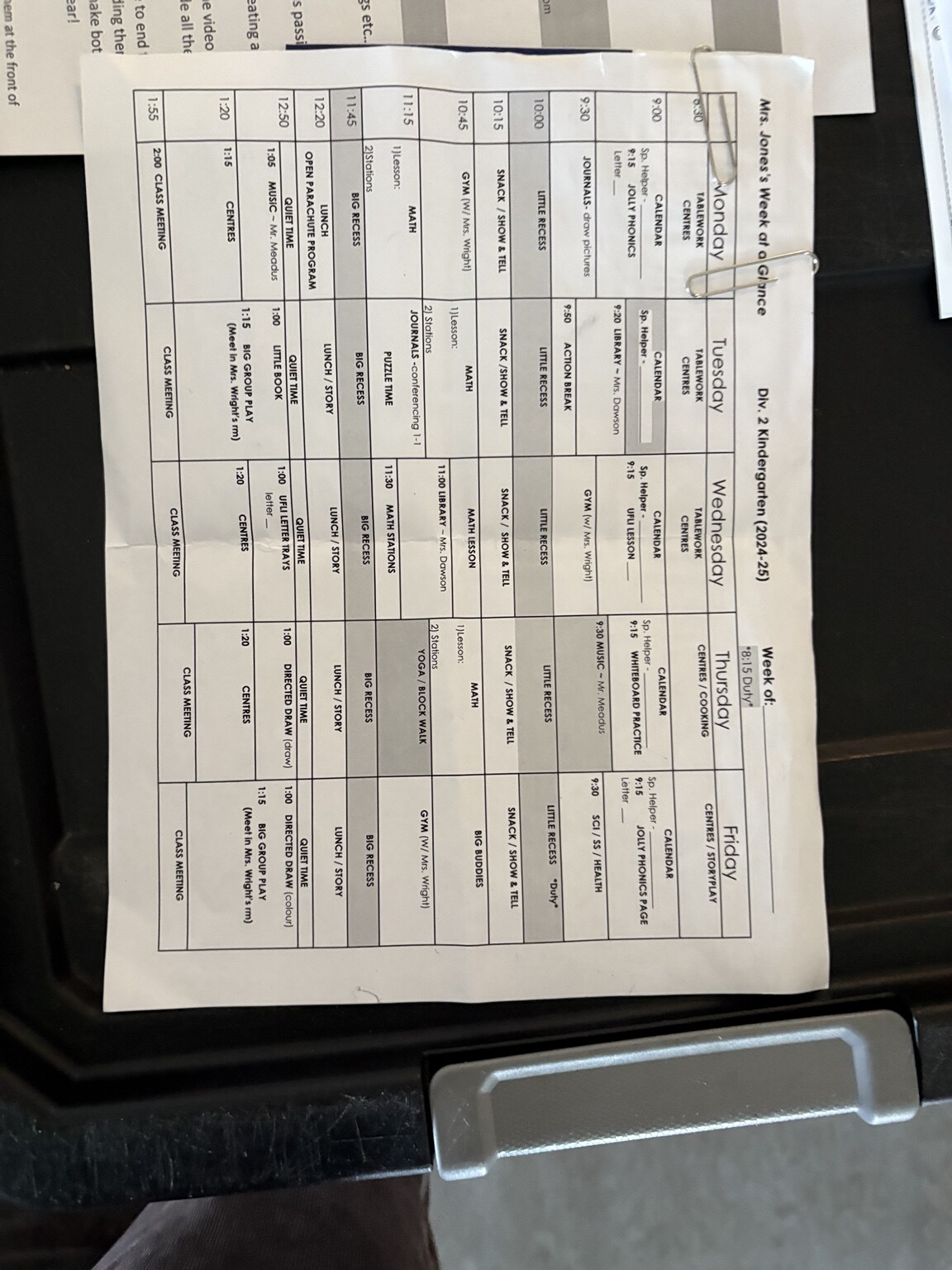
The comparison brings together three kinds of evidence: a graduate year-long literacy plan developed before a specific learner group was present; annotated kindergarten schedules showing the intended structure of particular days; and reflection on the classroom practice that followed—what was completed, adapted, shortened, expanded, postponed, or changed in response to the children in front of us.
From theory to practice
One idea, carried through three layers.
A coherent year before the learners were known
The graduate plan organized literacy research, possible activities, collaboration, resources, and revision across a full school year. Its value is the thinking it made possible—not a claim that the plan was later enacted exactly as written.
The day as it was intended
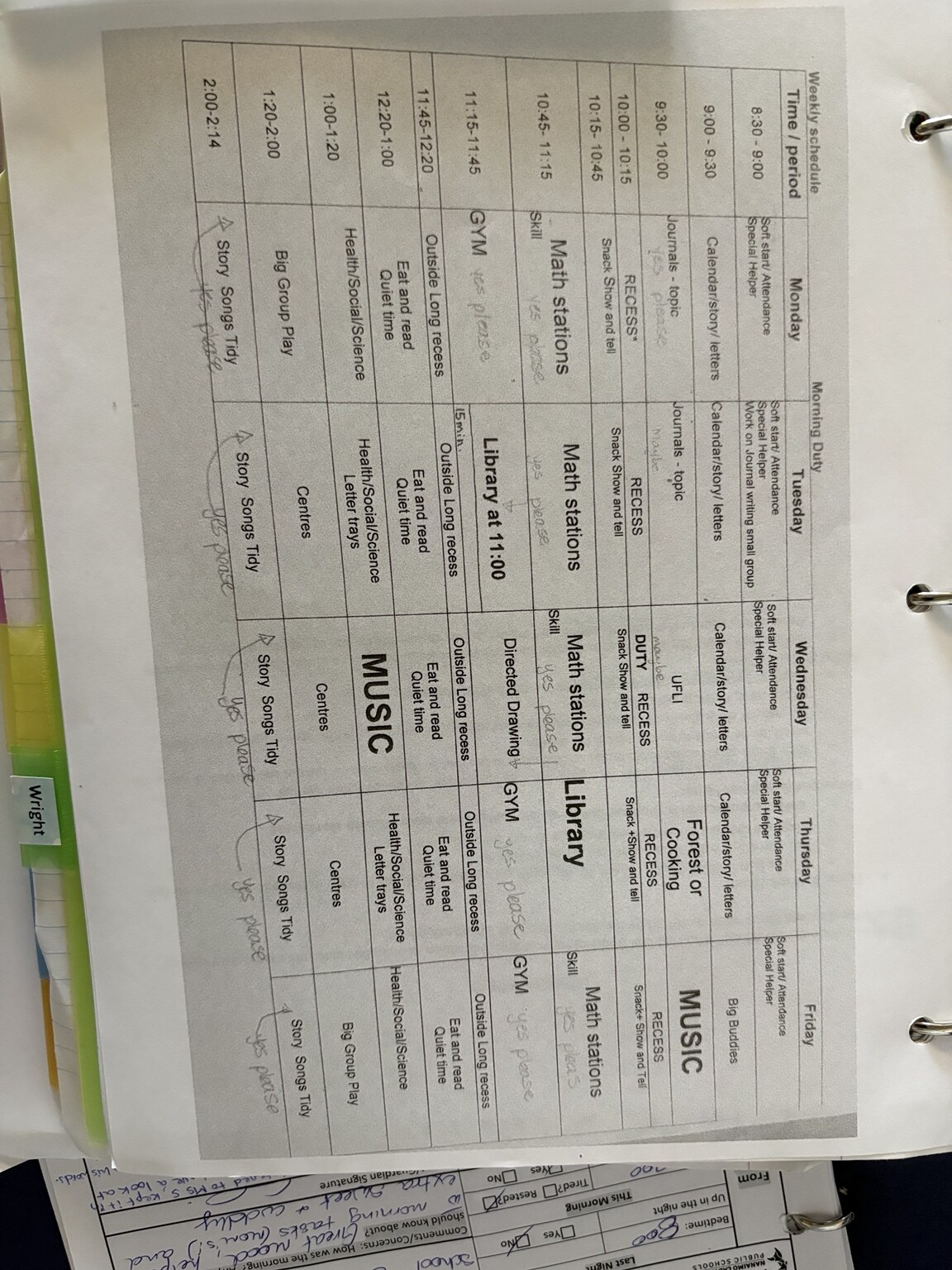
Lesley’s annotated kindergarten schedules translated curriculum, routines, centres, specialist time, movement, stories, and transitions into a workable weekly structure. The notes also show planning as collaborative, specific, and already open to adjustment.
The learners changed the route
What we completed, shortened, expanded, postponed, or replaced depended on the five-year-olds in front of us. Observation—not fidelity to a page—helped determine when the plan supported learning and when another need had become more important.
Inside the work
Planning has layers
The graduate plan shows theory organizing a possible year. The annotated schedules show a teacher shaping a particular week. Classroom practice shows why neither layer can become a script: five-year-olds bring energy, regulation, relationships, stamina, interests, and readiness into every decision.
Evidence from the artifact
Placed together, the materials show planning at three distances from the learner. Coursework establishes coherence and direction; the weekly schedule translates intention into a manageable classroom structure; observation determines what the moment actually requires. The comparison makes professional judgment visible without suggesting that a changed plan was a failed plan.
What this demonstrates
- 01Movement from educational theory into situated classroom judgment
- 02Long-range planning as direction rather than prediction
- 03Reading an intended schedule alongside what learners actually needed
- 04Responsiveness to energy, regulation, relationships, stamina, interests, and readiness
- 05Understanding adaptation as a professional decision rather than a planning failure
- 06Growing an internal library of what may work with different groups of learners
Reflection
Graduate coursework gave me an opportunity to think carefully about what a coherent year of literacy learning might include. Classroom practice taught me something the plan could not: good planning depends on knowing the learners who will eventually inhabit it.
In kindergarten, even a well-planned day can shift quickly in response to the energy, regulation, relationships, stamina, and interests of five-year-olds. I often began the day with a clear schedule of intended activities. What we actually accomplished depended on the children in front of us at that particular moment.
That did not make the plan irrelevant. It made professional judgment more important. A plan gave us direction and continuity; observation told us when to follow it, when to adapt it, and when another need had become more important.
I can already see how experience changes this process. The more groups of children an educator works with, the larger their internal library becomes: this kind of activity may work beautifully with this group; this transition will probably need more structure; today this lesson is technically possible but unlikely to be productive.
I am learning that planning is not predicting exactly what will happen. It is preparing well enough to respond thoughtfully when the classroom tells you something different.